What It Takes to Finish Writing an Essay: A Personal Reflection on Writing in Transit

What Does It Take to Finish an Essay?

What does it take to finish writing an essay—really finish it—so it can finally be submitted for editing and publication?

As someone who writes and edits at the same time, I’ve learned that overthinking is a hazard. When I obsess over sentence structure or polish language too early, I trap myself. The essay never ends. It becomes a technical puzzle, not a finished piece.

The Commute as My Writing Desk

Writing doesn’t happen for me in a perfectly lit room with a cup of tea. My thoughts begin while I’m on the move: waiting for a cab, on the train, walking to class. These everyday moments are when I ruminate.

I wake up early not just to arrive on time, but to watch a movie on my phone, read an e-book, or sit in stillness before class. After teaching, I go home and do nothing—and that nothing is part of my process.

So when do I write? Always. But finishing is different.

To Finish Writing, I Have to Stop Writing

To complete an essay, I must choose to stop the stream of thoughts that constantly generate new ideas. I have to pause the inner voice that narrates the lives of people I see in transit or dreams up dialogues for characters I haven’t written yet.

Standing on an overcrowded train, I might find the final sentence. The crowd, the coughing, the impatience—they force me to stop imagining and start concluding. If I let myself spiral back into reflection, I risk starting over and losing the way.

Editing: When I Switch Hats

To finish writing is to begin editing.

Editing demands humility. I must put aside the pride of authorship and ask, “Will the reader understand this?” I stop writing for myself and start writing for the Other. But to do this, I must let go first. I need time away from the piece. A day, a week—then I return with new eyes.

Editing happens in a coffee shop, away from home’s chaos. On Saturday afternoons, I escape the constant “wars” between my sister and her ten year old son. I ask the barista to lower the music. In this semi-public space, I finally read what I wrote. I assess. I edit.

Writing as a Nomadic Ritual

My writing lifestyle is nomadic.

I’m always moving—alone. Movement defines my ordinary life, which I’ve come to see as extraordinary. Meaning finds me in everyday places: a crowded train, a quiet hallway, a blank space on a bench.

But finishing an essay in a nomadic life? That’s harder. It requires stillness. A pause. A decision to stay put—just long enough.

To Finish Writing Is to Embrace the Unfinished

To finish writing an essay is to stop, breathe, and let go.

It’s to recognize that thoughts are transient. That stories are circular. That endings are almost always arbitrary. To complete something is to make peace with imperfection and mystery. Every piece I finish is a brief moment of stillness in a life that’s always in motion. Every finished essay is just a pause before the next beginning.
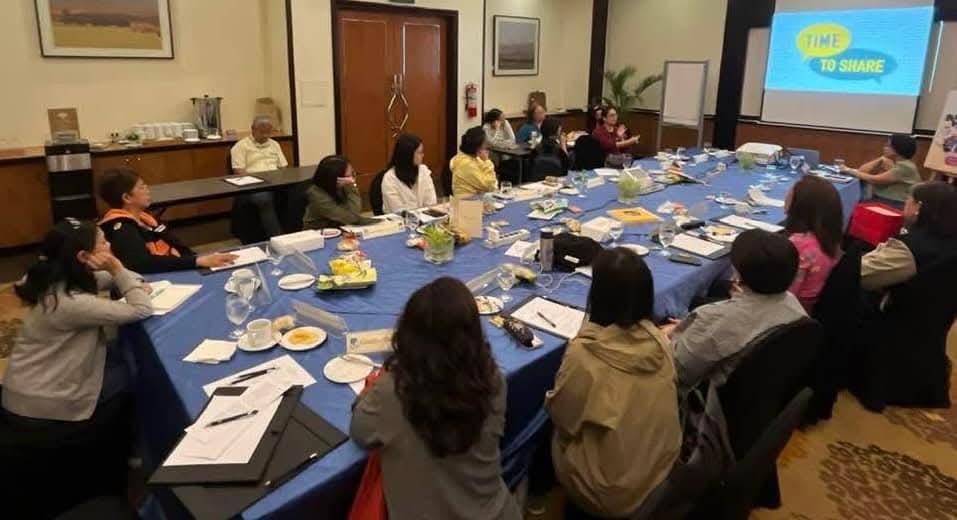
Reimagining Faith and Story: A Gathering of Christian Literature Children’s Book Authors for the Filipino Child

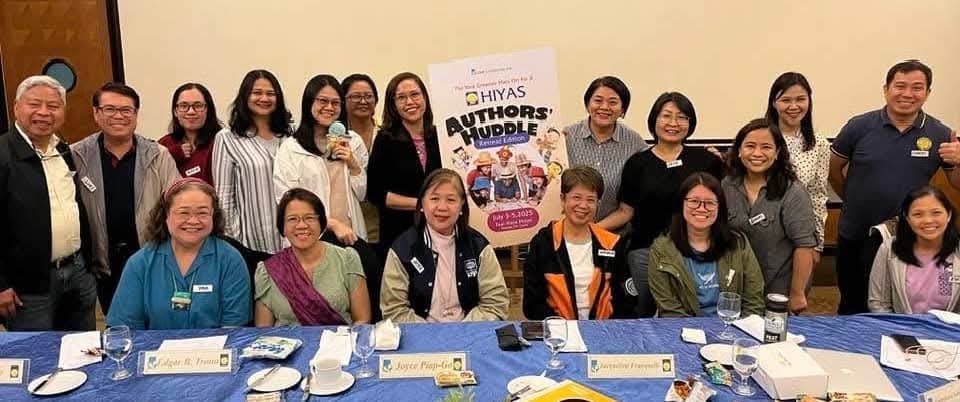
In Taal Vista Lodge in Tagaytay, twenty children’s book authors came together for a weekend summit to pitch, discuss, and dream: What does Christian literature mean for the Filipino child today?

Among the participants of the Hiyas Authors’ Huddle, some have a long-established careers with children’s books distributed in schools and bookstores nationwide. Their stories focus on child development, spiritual nurturing, and educational psychology, shaped by real-life encounters with children through their diverse vocations—a missionary, a lawyer, a radio broadcaster, a poet, and a teacher. Yours truly is the only one who has not yet published a single children’s story, but we all shared one conviction: that the stories we tell our children shape not only their imaginations, but also their hearts.

Faith and the Filipino Child

At the heart of this gathering was a shared desire to align with the Department of Education’s (DepEd) K to 12 framework—specifically, the DepEd Filipino child profile, which envisions the learner as “a whole person who is maka-Diyos, makatao, makabansa, and makakalikasan.”

The DepEd’s learner-centered framework recognizes that education is not only academic but also moral, spiritual, and emotional. It sees the child not merely as a student, but as a citizen of a wider moral universe. Christian literature for children, then, becomes more than Sunday reading—it becomes a tool for character formation, spiritual grounding, and cultural identity.

Authors carry a deep responsibility to present not only doctrinal truths but also healing narratives—especially for children who experience brokenness at an early age. When we write for children, we write for wounded souls who may not yet know how to name their grief—but who already know what hope feels like. In communities affected by displacement, storytelling becomes a powerful tool for trauma recovery and spiritual formation; a simple narrative about God’s faithfulness can mean everything to a child who has lost their home.

There was also strong emphasis on the value of integrating Christian children’s literature into academic and developmental contexts. “We’re not only planting seeds of faith,” one participant noted, “we’re also building literacy, emotional intelligence, and cultural memory.” This holistic approach reflects the DepEd’s vision of a Filipino child who is makatao and makakalikasan—formed by relationships, environment, and faith. The authors in this workshop affirmed that when Filipino children read stories that reflect their language, beliefs, and community, they grow not only in knowledge and confidence, but also in conscience and compassion.

Bridging Church, School, and Home

Urgent and reflective questions for us as Christian children’s book writers: What does it mean to write stories that support the formation of the maka-Diyos child in today’s fast-paced, screen-saturated world? How do we tell tales of kindness, forgiveness, and truth that also honor the local culture, language, and the everyday realities of Filipino families? During the two-day meet, the participants also reflected on key questions:

  • How do we portray the person of Jesus in age-appropriate, culturally relevant ways?
  • How can our books affirm a child’s identity as both Filipino and Christian?
  • What themes are most needed today—hope, honesty, obedience, resilience?

Toward a Theology of Children’s Literature

In pitching their storybook idea, every writer is sensitive that Christian literature for children need not be preachy or distant. It can be playful, poetic, and close to home. When done with care, these books can reflect the very heart of the Filipino child as envisioned by DepEd—a learner who is not only knowledgeable, but also kind, creative, and anchored in faith.

The Gospel is filled with moments where Jesus honors children—not just as symbols, but as real individuals who carry divine insight and worth. Writing Christian children’s books, then, is a sacred act. It is discipleship in story form. When we write about a child who learns to pray, or forgive, or wonder about God—we are not simplifying theology. We are embodying it.

The authors present resolved to continue as a network of Christian children’s book writers committed to uplifting the Filipino child. Christian literature for children in the Philippines is not a niche—it is a mission. It is a way to raise up readers who are not only smart, but also spirit-filled. Writers, publishers, educators, and parents are invited to join this movement. After all, as Jesus said, “Let the children come to me, and do not hinder them.”

Often, the way they come is through a beautifully told story.

Where the Sea Meets the Story: Dreaming Through Writing

I often find myself envisioning my dream home—a quiet retreat perched above the beach, embraced by the soft blue outlines of the mountains that cradle Batangas Bay or Tayabas Bay. These coastal landscapes have long lived in my imagination, reminding me of Malitam, where we once ran barefoot on the sand and gathered seashells beneath the sun.

In this sanctuary of the mind, sliding glass windows welcome the golden light of morning. A small garden rustles in the breeze, and the rhythmic sound of waves fills the air like a lullaby. Though I may never build it with my hands, I continue to dream of living in this space—where peace, creativity, and stillness dwell together.

More than just a dwelling, this imagined home reflects a deeper longing: for space, for quiet, and for the freedom to imagine without limits. At its center lies a cozy library and study. Shelves are filled with books I love and musical scores that stir my soul. A sturdy desk waits quietly for my pen to move across the page. I see myself writing there—fully immersed—turning memory into story. In that quiet, inspiration stirs. Characters awaken. Journeys begin.

Writing and Dreaming Alike

Writing—especially a memoir or a novel with many voices—is, in many ways, like dreaming of a life rooted in peace and belonging. Every word is a step deeper into a space that doesn’t yet exist, but feels vividly real. Each chapter is like entering a new room in the imagination, crafted with intention and care.

Just as I return to the vision of that seaside home again and again, I return to the page. My writing, like my dreaming, is an act of persistence and quiet hope. Sometimes, the vision fades. Sometimes, doubts creep in—will this dream ever take shape? Will the words ever say what I mean? Still, I carry on. Dreaming costs nothing. And writing, too, is a kind of faith—a devotion to meaning, to beauty, to truth told in my own voice.

The Gift of Imagination

There’s something tender and sacred about both writing and imagining a home. They begin as quiet sparks. Dreaming becomes planning. Imagining becomes creating. Hoping becomes persisting.

There are no fixed blueprints—just a trust that something meaningful can emerge. Writing stirs emotion just as a home offers comfort and belonging. And neither journey is measured solely by completion, but by the faith and passion that carry it forward. In both, I am learning that the heart often knows the way long before the feet begin to follow.

A Prayerful Reflection

I pray that one day I may live in that house by the sea—a space where my soul can rest and my creativity can thrive. I ask the Lord to help me overcome doubt and to rest my faith in His higher ways and perfect timing.

When I write, I do so with the belief that my words are a witness to who I am and who I am becoming. And I trust that God is not finished with me yet.

Both writing and dreaming of living in a house by the beach begin in the quiet—on blank pages, in silent prayers, and in the deep spaces of the heart where imagination is free to wander. They are acts of trust. As I continue to write and dream, I do so not alone, but with faith that what I long for—whether it’s the comfort of a seaside home or the unfolding of a meaningful story—will one day become a blessing, not only for me, but for others too.

Oras ng Tahimik

Habang mag-isa sa sulok na dalanginan

ay nagsusulat ng mga hinaing

panukala panagimpan

Pinakikinggan Niya ang mga salita

Nalalaman ang hinuha paalam

At alam din Niya ang mga pabula ng

dila panayam mga pasinaya

Walang mananatiling lihim

o hiwaga ng isip at pangangatawan

Walang hahayaang maligaw sa

tanong mga pagkagulat

Maraming salamat

Sa pananatili ng liwanag

pag-aagam agam sa dudang paggiliw

pamimintuho ng pag-ibig

Maraming salamat

Sa pag-igpaw ng wika

sa dibdib ng maliw sa walang hanggan

Pahintulot na makapasok

sa sinapupunan ng Iyong Salita.

Quiet Time

Alone in the corner—
praying, writing:
petitions, dreams, visions.

He listens,
each word thick with the scent
of looming goodbyes.

He knows tongues and fables,
curiosities, projections—

no thought or flesh
remains hidden.
Nothing is lost
to doubt or wonder;
he allows no shock
to linger.

Thank You.

That light persists
even in the fog of doubt,
and grace—
ever searching—
still finds love.

Thank You.

Words brim with wisdom,
spilling into eternity—
graceful entries
into the womb
of Your Word.

copyright by ninangjatwordhouse.com 2025

Living My Extraordinary Life

Now and then, I find myself wandering into the realm of what-ifs. I look back and think about the things I might have missed—those extraordinary milestones people often speak of. Extraordinary in their scale, boldness, impact, or the way they’re remembered.

But when I scan the contours of my own life, nothing leaps out as extraordinary. No major celebration. No daring adventure. No public achievement or sweeping cause. My days have always been—and still are—structured. Predictable. Routine.

And the more I live inside that routine, the more I drift toward wondering what could have been… if.

But then again, I write.

Writing has been the central activity of my life since I graduated from college. It may not be flashy, but it’s a major part of who I am. I didn’t always plan for it to be this way, but through small, gracious opportunities, writing became both discipline and refuge. And yet, if you ask any writer, they’ll tell you: writing rarely feels extraordinary. Not unless you’ve written a bestseller. Or at the very least, been published somewhere beyond your blog or email inbox.

Maybe just being published—especially in this country—counts as extraordinary.

Still, there’s a steadiness in the act itself. A consistency to the way I keep desiring, doing, and persisting to write. That rhythm—that stubborn, almost meditative presence of writing in my life—is the heartbeat of my days. It isn’t glamorous. But it’s where I feel most alive, where understanding flickers into clarity. Writing moments are small, quiet, but weighty. Sometimes, it feels as if I’m helping shift something in the world—even if just a little.

Most days, it means sitting alone for long stretches. First with pen and paper, now with my computer. Often anxious about choices. Making mistakes, realizing them, regretting some, letting others go. This is part of the writing life. And strangely, it’s also what makes it extraordinary: the sheer amount of time spent thinking and reflecting quietly affirms that this life is worth living.

Progress is slow. Publication, even slower

But there’s something deeply fulfilling about thinking hard about a single idea—shaping it, doubting it, challenging it, then moving it forward, even a few lines at a time. Will my work ever make waves? I’ve stopped asking. That question, I’ve come to realize, is beside the point.

There are evenings when I stare at my screen and wonder: is this it? So what if I can write? What do I have to show for it? A folder of half-finished drafts? A blinking cursor? A cluttered desk and a dozen tabs open?

And yet, I keep going.

I don’t have a breakthrough book or an award-worthy story. But I’m starting to believe that this writing routine—the one I’ve practiced quietly for years—might be more extraordinary than I once thought. Not because it’s dramatic. But because it’s real. Because it’s steady. Because it’s full of care.

I used to think extraordinary meant once-in-a-lifetime. Now I think it can mean showing up every day with purpose, even for small, quiet tasks. Even for words that no one may read.

I’m keeping the rhythm.

A blog post. A personal essay. A newsletter draft. None of this is easy. But I like doing it. And maybe that’s what makes it extraordinary. How strange, and lovely, that simply putting words on a page makes me smile.

So I keep showing up. I keep piling pages onto pages of drafts that may never be published. I have poems that might one day find their way into a personal anthology—Volume 2, perhaps.

I’m performing my extraordinary life in circular motion—looping back, writing again, making meaning from the mundane. Extraordinary because it keeps going. Extraordinary because I am enjoying it to the fullest.