Fearfully and Wonderfully Made: Understanding Our Divine Design

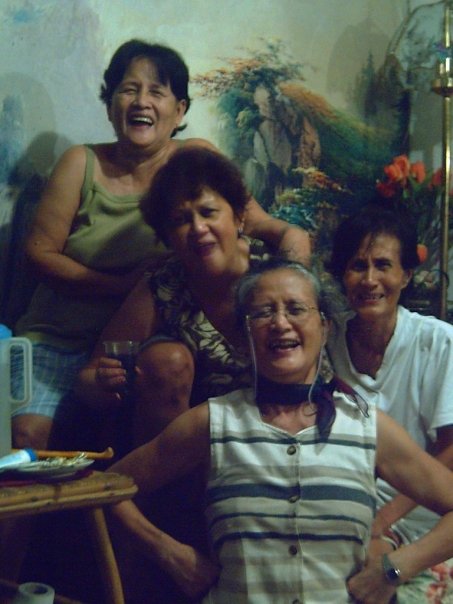
old women sitting together

“I praise You, for I am fearfully and wonderfully made. Wonderful are Your works; my soul knows it very well.” Psalm 139:14

These words from King David reminds us of God’s craftsmanship of our existence. We are not accidents of nature or products of random chance; we are deliberately created in the image of God (Imago Dei), with dignity, purpose, and worth. But what does it mean to be fearfully and wonderfully made?   

In the Image of God

“Then God said, ‘Let us make man in our image, after our likeness…’ So God created man in His own image, in the image of God He created him; male and female He created them.” Genesis 1:26-27

Unlike animals, plants, or celestial bodies, only human beings bear the divine imprint. To be made in God’s image means that we reflect His character, creativity, and moral responsibility. While we are not divine, we have been given a unique capacity for reason, love, and dominion over the earth. Our inherent worth—no matter our background, appearance, or abilities – carry God’s signature in our being. It also establishes our purpose—to reflect God’s nature in the way we live, love, and steward creation.

Fearfully Made Nature of Our Creation

The Hebrew word for “fearfully” (יִרְאָה, yir’ah) conveys reverence, awe, and deep respect. This suggests that our creation is not a simple or mundane act but a work of divine precision and majesty.

Science echoes this biblical truth. Our bodies are masterpieces of complexity:

  • The human brain contains about 86 billion neurons, capable of processing vast amounts of information.
  • Our DNA, a microscopic yet information-rich code, carries 3 billion base pairs, guiding our development.
  • The human heart beats 100,000 times per day, pumping life-giving blood through nearly 60,000 miles of blood vessels.

Such intricacies declare the glory of our Creator. Every heartbeat, every breath, and every function in our body testifies to His wisdom and power. God’s care in forming us should inspire humility and gratitude, leading us to worship the One who crafted us so marvelously.

Wonderful, Unique Purpose

“For we are His workmanship, created in Christ Jesus for good works, which God prepared beforehand, that we should walk in them.”

Beyond our physical design, we are wonderfully made in terms of our purpose and identity. Each person is uniquely gifted, equipped with talents and abilities that contribute to God’s plan. No two people are exactly alike, yet each life carries divine intention.

  • We are not an accident.
  • Our life has meaning.
  • God has prepared specific works for us to accomplish.

Whether in acts of kindness, artistic expression, leadership, service, or worship, we are called to reflect His goodness and creativity in the world. The way we love, forgive, and serve should mirror God’s love, drawing others to Him.

Distorted Image

While we are fearfully and wonderfully made, sin has marred God’s image in us. When Adam and Eve disobeyed God (Genesis 3), humanity fell into brokenness. The divine image was not erased but became distorted.

  • Instead of reflecting God’s holiness, we became prone to sin.
  • Instead of living in harmony, we experience conflict and division.
  • Instead of walking in purpose, many live in confusion and despair.

Sin damages our understanding of who we are and whose we are. It leads us to seek identity in fleeting things—success, appearance, relationships—rather than in God. However, the good news is that God’s plan was never to leave us in this broken state.

Restored Image Through Christ

“Therefore, if anyone is in Christ, he is a new creation. The old has passed away; behold, the new has come.” 2 Corinthians 5:17

Jesus Christ, the perfect image of God (Colossians 1:15), came to restore what was lost. Through His life, death, and resurrection, He made a way for us to be renewed and transformed.

By accepting Christ, we are:

  • Forgiven: Our sins are washed away, and we are reconciled with God.
  • Transformed: The Holy Spirit renews our hearts and minds.
  • Empowered: We are equipped to live righteously, reflecting God’s love and truth.

Our calling, then, is to continually conform to Christ’s image (Romans 8:29). This involves growing in holiness, love, and wisdom—becoming more like Him daily.

Living Fearfully and Wonderfully

How we live as fearfully and wonderfully made human beings is reflected in how we:

  1. Value Ourselves and Others
    If we are made in God’s image, then every life—regardless of age, status, or ability—is sacred. This truth combats low self-worth, racism, prejudice, and injustice. We should treat ourselves and others with dignity and love.
  2. Honor God with Our Body
    Since our bodies are divinely crafted, we should care for them through healthy living, avoiding harmful habits, and using our strength for His glory (1 Corinthians 6:19-20).
  3. Fulfill Our God-Given Purpose
    Whether through work, ministry, or relationships, God has placed you on earth for a reason. Seek His will, develop your gifts, and serve where He calls you.
  4. Reflect Christ in Our Daily Life
    In a world that often forgets its Creator, we are called to be light (Matthew 5:16). Our words, actions, and love should draw others toward God’s truth and grace.

We are not random occurrences but fearfully and wonderfully made by a loving Creator. We bear His image, carrying immense worth and purpose. Though sin has distorted this image, Christ offers restoration and renewal. Our response is to live in gratitude for our divine design, honoring God with our lives and reflecting His love to the world. Every moment of our lives recall this basic truth: we are fearfully and wonderfully made!

Breakfast and Sprinkler Hunt

The morning starts the way most with Joseph do—familiar and full of the small wonders only he can bring. We’re sitting in a McDonald’s booth, a warm glow of sunshine cutting through the fast-food ambiance. It’s just past eight AM, the lull between a wake-up grogginess and some minutes of slow walking. The clatter of trays and the hum of conversation swirl around us, but Joseph is tethered to the tablet screen in front of him, fingers swiping with practiced ease, eyes locked in concentration.

There is a quiet here that’s deceiving, a bridge between generations. I watch as his brows furrow, his mouth parts slightly—just a sliver. It’s one of his habits when he’s deep in thought, navigating his favorite cartoon, or maybe it’s a you tube video that’s drawn him in this time. I sip my coffee, taking in the gentle steam rising from the rim of the disposable glass. The moment is precious in its simplicity.

“Joseph, here comes your chicken fillet with rice.” I reach out and push the tray a little closer to him, the smell of hash browns and gravy lifting slightly from the paper plates. He snaps out of his digital daze and looks up at me with eyes that hold a child’s boundless energy and the growing awareness of the world. He grins, dropping the tablet, hands reaching to uncover the tiny plastic cups of gravy. “You eat the egg Ninang, I don’t like it, it’s burnt.”

The click of the tablet locking is a sound I’ve come to know as a tiny victory—technology yielding to the present, even if for a brief moment. Joseph eats with focus, but between bites, he pauses. I follow his gaze to the patterned tiles of the ceiling, speckled white with rows of recessed lights and the occasional shadow of a duct.

“I can’t find any sprinklers here Ninang.” McDonald just renovated their site and we are still adjusting ourselves to the new look and ambiance. Joseph was very serious with his comment as if he were a detective and this ceiling, the latest mystery.

“Probably they hid them behind the walls” I say.

“That’s funny, how can they hide the fire alarm and sprinklers?” He snapped, slightly annoyed, even as he bites a mouth-size of the fillet.

“You find them anywhere anyway. They’re the same anywhere.”

He ignores my remark and finishes his food. Breakfast disappears between his comments over his imaginary friend, Spidey, this finger crawling creature who always has to climb a water spout. Joseph has invented many iterations of this spider, giving it a raincoat, an umbrella and goggles so the rain water will not wash it away and drown it. This, aside from hunting sprinklers, is his other obsession. And he has given sun and clouds various expressions depending on his mood. He cuts colored paper into sun and clouds, gluing them one on top of the other, marking the clouds with sadness and a frown, and the sun, with glowing brightness.

As for the sprinklers, he takes pictures of those using his tablet camera.

After breakfast at McDo, we’re on our way to the condominium garden area, where we will just sit down and laze away the hours until eleven AM, when we can finally proceed to the mall. To Joseph, the mall is more than a hub of shops; it’s a sky filled with secrets, a landscape of fire alarms and sprinklers waiting to be spotted and studied.

When we’re finally able to walk into a mall, the cool blast of air conditioning greets us, carrying the smell of fresh donuts and new shoes. Joseph’s steps quicken, his head tipping back until he’s looking straight up, eyes wide like an explorer charting unmarked territory. I slow my pace to match his, each step deliberate so as not to rush the sacred ritual of discovery.

“There!” he says, pointing out a cluster of sprinkler heads. He snaps a picture of the silver disks gleaming faintly, as they are caught in the glow of the recessed lights. Joseph’s face is lit not just by the ceiling’s reflections but by something more—a bright and earnest joy. I look up too, my neck craning as if seeing them might let me share a fraction of the wonder that fills him.

“See the little glass tube in the middle?” he asks, his finger tracing a tiny arc in the air.

I nod. He tells me the brand of that sprinkler, and holds me like a captive student in a classroom. It’s easy to miss the magic in something as mundane as a fire alarm or a sprinkler system, but here with Joseph, under this sky of steel and plastic, it’s impossible to look away.

An older couple shuffles past us, and I catch their curiosity as they follow our upward gaze. I smile back at them, without apology. This was an unspoken acknowledgment of a moment that feels ordinary but isn’t. As the two of us walk further, each corridor of the mall became a constellation of ceiling features. For Joseph, it’s a quest; for me, it’s seeing wonder through his eyes, the pure, undiluted kind that makes any day feel extraordinary.

We sat on a bench near the fountain, the gentle rush of water mixing with the distant melody of a store’s playlist. Joseph climbs sits cross-legged as if he’s at home on a couch and goes back to his tablet, picking on the new snaps of sprinklers. He will use them later to copy and paste and give a color in a new canvas of his own making. The ceiling above is vaulted, a marvel of steel beams crisscrossing each other like a web, and sprinkled—no pun intended—with tiny red fire alarms.

“There are more of them in malls than anywhere else,” he says, sage-like as he swipes at the new pictures, his voice mingling with the sound of splashing water. I chuckle, ruffling his hair as he bats me away with a grin.

“I will count them.” Then, he’s on his feet, again, eyes sweeping upward, already counting, one, two, three… His voice fades as my gaze drops back to eye level, taking in the scene, the people milling around us, oblivious to the universe above them. But Joseph isn’t. And because of him, neither am I.

Time stretches, an elastic band that holds us together, anchored in this shared ritual of ceiling-staring. He’s at twelve when he pauses, tilting his head like he’s just realized something new. He turns to me, eyes sparkling with a blend of excitement and sincerity.

“They’re amazing, they’re everywhere. Look!” His voice gets louder. “What happens if there’s a fire Ninang?” He asks.

“You know, the sprinklers will put away the fire.” I answer.

He nods grinning, “I know.”

There’s a beat of silence, the kind that wraps around you when you’re aware of the time passing, even as you savor every second of it. The mall spins its seamless life cycle, but this—this is a moment. Joseph counting sprinklers, the two of us here, together. It’s not the grand adventures or the orchestrated outings that stick, I realize. It’s these fragments of shared awe, where the world is suspended just long enough to notice.

“Come on,” I say finally. “Let’s find more.” And with a grin, Joseph nods, the mall stretching ahead of us like a map of hidden treasures, ceilings included.

Why I Write

Joan Didion’s essay with the same title has brought me back to an old issue. What have I got to say that has not yet been said, how to even say whatever in this world of artificial intelligence, for, afterall, readers simply ask CHAT GPT for answers to even the simplest, most mundane question?

In fact, this is the prompt I wrote and the ChatBot’s answer led me to Didion, since she wrote an essay with the exact same title.

I wonder at how petty this question can get given that the basic answers are already available. However, when I asked this question the motivation is so that I will like writing more.

why i write at all

Not writing at all has never been an option for me, but why I write at all has escaped me completely. That is, I never asked that question since for me, writing is my job. It is my training. It is my product and my brand, I am without meaning if I can’t write at all. It has been given to me as part of my core identity – that if I don’t do it, then I am nothing.

But a lot of times, I don’t like it – its demand for authenticity, its desire for expression, its guffawing of vulnerability. I should not be unhappy with writing but while I can do it, I don’t earn from it. It has never been a way to financial gain. Which is to say that automatically, I am that starving artist they are talking about if writing is my art.

Then there is that question of if I write at all and nobody reads it, what is the point of writing then? The battle to get published, or at least noticed, the byline to get plastered under any article I’ve submitted is a reward that has always been too difficult for me to get. In fact, I have not had much satisfaction in this area of seeing my byline. I have not been published, I self-published my collection of poetry and this gave me only additional expenses, but no feeling of reward.

writing books still matters much

And today, the setting for writing contributions has completely evolved. There is no more deep competition for one to get noticed. Yet, getting noticed once isn’t the point today. The point is getting noticed and influencing to the point of trending so that one can make an impact.

I believe that books will still do this – leave lasting impact, but influencers using writing to influence get to me. I envy them somehow – how many likes they get, how many reads, how many downloads, how many shares they get. There’s a deep insecurity in content writing because I am not able to reach many – it is not enough to be read by one or two. For a writer, this is actually a failure – so why write at all, this is the question.

Yet, I am into brainstorming and planning some books i still want to write and i am trying to convince myself to make time for book writing. Why persist in this is just something I do, that is, well, what else is there to do? I can write, so then just do it – i tell myself.

not writing is the enemy

But as I’ve said, I could not stop writing. somehow, I try to rationalize this by saying that I have been called to write – but for what, I still have no answer yet. Somehow, writing has given me something to do. I’ve never been idle in that lonely sense of the word because writing has always kept me company. While others may wonder and linger on sad memories, I simply write about my day, and my moments, however trivial and non-eventful, because I have pen and paper and time to kill. And then there’s the question of why I should not write – and the answer is that if I don’t then, time will pass wasted and it will lengthen to days and months and years of sadly looking out to a horizon that I won’t be able to articulate in words.

the robots don’t mind not having a mind

Today, I used two AI bots to write a very impersonal essay, and then I wrote my personal view of the same subject. I posted one similar take but by a different BOT in three separate blogs, and on my non-influential blog, I wrote my authentic take. And I realize that while the AI bots can make me write as fast as I want, it does not give me the satisfaction of this interaction that I get between me and my own mind.

Because writing I believe is just that interaction – a thinking that goes roundabout – out, in, and back again, so that we can live by what we are made to live by. The reason for why I write is simply this roundabout back and forth between me myself and I. Does this matter at all when nobody else sees it or reads it or even looks at it?

Well it is somehow problematic that I am less worried about an audience now than when I was in my thirties. Because I think that is what old age does – it lets you be comfortable in your own skin, and the rest of the others who won’t read you don’t really matter. This is true even as I look with the reason for what I want to do that is writing – because I have stopped getting stressed out about bylines and getting published. The new stress has something to do with the question of how writing can be my lifelong companion as I retire from full time work – whether it will sustain me, even spiritually, since I will turn to it more times than I should when I have ceased to wake up early and travel to school to teach.

Why I write then today is because I am preparing to live the rest of my days by writing. And I hope that I can live a full life by writing given all these AI proliferation of texts done by non-mind agents of language perpetually curating language from the moments and idylls of happy authors.

The Good Samaritan Parable: A Lesson in Loving Our Neighbor

100 words on the Parable of the Good Samaritan

In the Parable of the Good Samaritan, Jesus teaches us the profound lesson of loving our neighbor. The Samaritan, an unlikely hero, saw a wounded man and showed him compassion, while others passed by. This story challenges us to go beyond societal boundaries and personal prejudices, extending kindness to all, even those we might consider strangers or enemies. In our daily lives, we are called to act as the Samaritan did—offering help without hesitation and loving others as ourselves. May we open our hearts to God’s love, reflecting it through our actions towards everyone we encounter.

100 words on ‘being’ between Heidegger and Levinas

Heidegger and Levinas both explore the concept of being, but from different perspectives. Heidegger’s existential analysis in “Being and Time” focuses on “Being” as the essence of human existence, emphasizing individual authenticity and the nature of existence itself. For Heidegger, understanding being involves confronting our own mortality and the concept of “Being-toward-death.”

Levinas, on the other hand, critiques Heidegger’s approach, arguing that it overlooks the ethical dimension of existence. In “Totality and Infinity,” Levinas prioritizes the “Other” and the ethical responsibility we have towards others. While Heidegger seeks to understand existence in isolation, Levinas emphasizes relational ethics and responsibility as central to being.

100 words on Another Person’s Moment

Gazing at another person’s moment in time involves deeply witnessing and appreciating their unique experiences and emotions. It’s an act of empathy that transcends mere observation, allowing one to connect with another’s lived reality. This perspective fosters understanding and compassion, revealing the intricate tapestry of individual lives. By focusing on these moments, we acknowledge the significance of each person’s journey, recognizing their struggles, joys, and transformations. This practice encourages a profound respect for others’ experiences and fosters a sense of shared humanity, reminding us that each moment is a vital part of the broader human story.

WHEN MY LAST NAME MEANT ‘TREASURE CHEST’

Photo by Skylar Kang on Pexels.com

Every career option seemed to come to me as a favor. My first job was a favor from a friend, FR, from KAMI (Kulturang Aming Minana). I jumped at it because it was 1984, I had graduated from college, and I didn’t like to stay idle and jobless. As the eldest in the family, I felt guilty staying at home, even though I was also busy with ‘art-for-art’s sake’ things. My degree of Bachelor of Arts major in English seemed useless.

KAMI had by that time long concluded its theatrical productions and I was listless. F was officially a medical representative for Pascual Laboratories Pharmaceuticals Inc., but he moonlighted as a freelance artist and subcontracted his Batangas coverage area to me. The job was to cover physicians in Lemery and Lipa, to promote Betadine Povidone Iodine, Pascual’s main product line. Eventually, I applied to Pascual, thus I became one of its sales representatives from 1984 to 1985. It was a strange first job: since I was much given to introspection, I often spaced out in hospitals, missed my doctor calls and failed to meet my sales quota. Despite my bombast and aplomb at the product training, I was a total failure in the social field of sales and promotion.

Walang Sugat

In the theater group called KULTURANG AMING MINANA [KAMI], FR was the stage director, and DR, his wife was the voice instructor. They found us as Tanghalang Dalwa Singko via PETA and gave us an audition. Once they’ve chosen their cast, they directed and managed their presentation of the zarzuela ‘Walang Sugat’ in Tanauan first, then in Batangas City. We held our production with tickets at the St. Bridget’s Auditorium in 1980.  The original libretto presented at CCP was the very same libretto we acted and sang at the SBA, but much abridged to accommodate our limited voice range and lack of training in musical theater.

Sa Langit Walang Beer

F and D were probably trying to establish themselves as independent producers, and for their foray into provincial theater, they conducted theater workshops and began a series of stage plays in Tanauan. We presented at least two plays in Tanauan Cultural Center – Sa Langit, Walang Beer, and excerpts of Walang Sugat. Then, F and D collaborated with PETA on the production of Carlos P. Romulo’s Daughter’s for Sale, to showcase in Intramuros theater that same year. DFS became KAMI’s final production, and my part in that play was another tale about me being ‘favored’.

Daughters for Sale

The 1980s was a time of unrest for most Filipinos who were haunted by the horrors of martial law. Focus magazine was one of the more progressive publications at the time. In Intramuros when we presented Daughters for Sale, the lead actress, CC, who was also an editor of Focus, was suddenly unable to perform live because of a threat to her life. As the understudy, I was the immediate substitute to play her role-Rosario-in Daughter for Sale. So I had to wear her costume, say her dialogue, follow her blocking, and interact with fellow actors on stage. As an understudy, I was familiar with the script and blocking of DFS, but I still wasn’t prepared to actually play the part on the actual play date. The love interest of my character was played by actor LV. At the time, I wasn’t intimidated despite his reputation as an excellent actor because I was more conscious about my unfitted costume than of my poor acting. Actress C had a round, full body, while I was paper thin. I felt unwrapped even if I was wearing period clothing. Still, with the help of the other actors, the play began and ended as it should.

The following day [or weekend, I can’t recall] the columnist Crispina Belen thought I winged it, and gave me a warm ‘kudos’ tweet [no Twitter yet in 1981]. She wrote in her column in Bulletin Today, ‘kudos to Jophen Baul’ for her performance in Carlos P. Romulo’s Daughters for Sale. I clipped this public ‘tweet’ in a periodical, totally assuming it was me despite the wrong last name. This clipped memory of my fifteen minutes of fame is a treasured whatnot among my files.