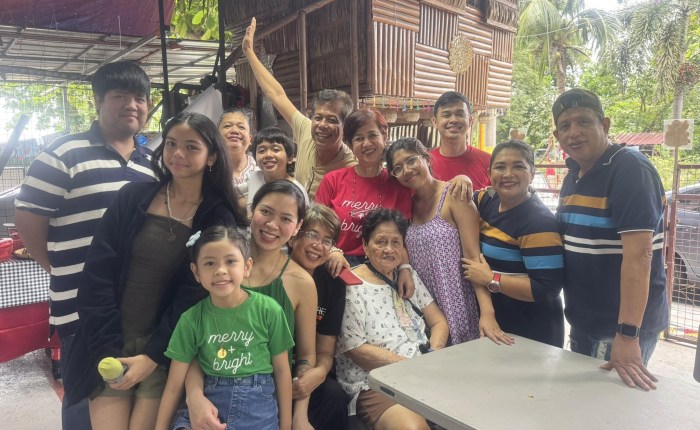
Bawal ang Absent sa Christmas Gathering!

Bawal ang Absent sa Christmas Gathering!

Long Commute, It’s Raining, and Our Journey Home

In this cold and wet December, when rain comes suddenly and unapologetically, we crawl the Southern Route to Batangas City, gritting our teeth through slow traffic in areas where road widening seems to extend forever. In my brother’s “garden suite,” where he was forced to cage his dogs for a day, messages poured into our FB thread called Batangas Peeps:

“On the way na.”
“Malapit na.”
“Stuck lang konti sa traffic po.”
“Lakas po ng ulan dito ngayon.”

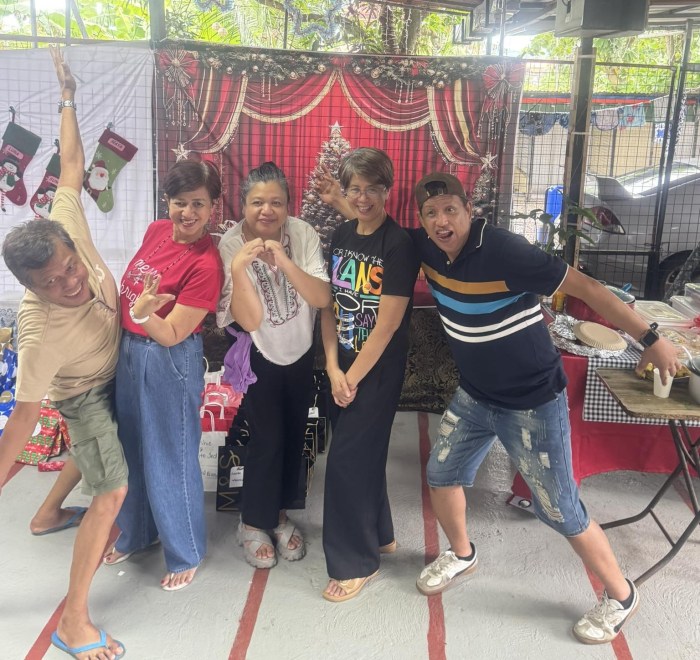
Meanwhile, my sister dons her event planner/organizer persona, decorating our venue. My sister-in-law assists her (though the place is hers), supplying all demanded party plus-plus: tables, a Christmassy background for picture taking, Santa Claus socks hung on a flimsy but cute décor. She even bought new chair pillows.

Honestly, this is already enough reason why I can’t treat our family reunion as optional.

A Feast That Symbolizes Family (and Grace)

As the house slowly filled and nephews and nieces, with their little ones, came eagerly in cars loaded with gifts, laughter rose even before greetings were completed. Someone immediately asked if the food was enough, but no one needed to worry. Family brought pancit, lumpiang shanghai, sinaing na tulingan, embotido, humba, nilagang sitaw at kalabasa, Jollibee fried chicken, suman sa lihiya, suman sa gata, puto, kutsinta, chocolate tart, piña, grapes, saging—too much food in fact, that after the party, everybody brought home a Sharon share of the pot.

We ate with enthusiasm and without restraint, because this is a no-holds-barred affair: you eat without apology, knowing that tomorrow you will still be family. For me, the excess food was symbolic of God’s ample grace. There is always enough. The reunion reminds me that abundance is the rule of God’s blessings; scarcity is never the norm in His economy.
Gifts, Games, and Good-Natured Chaos

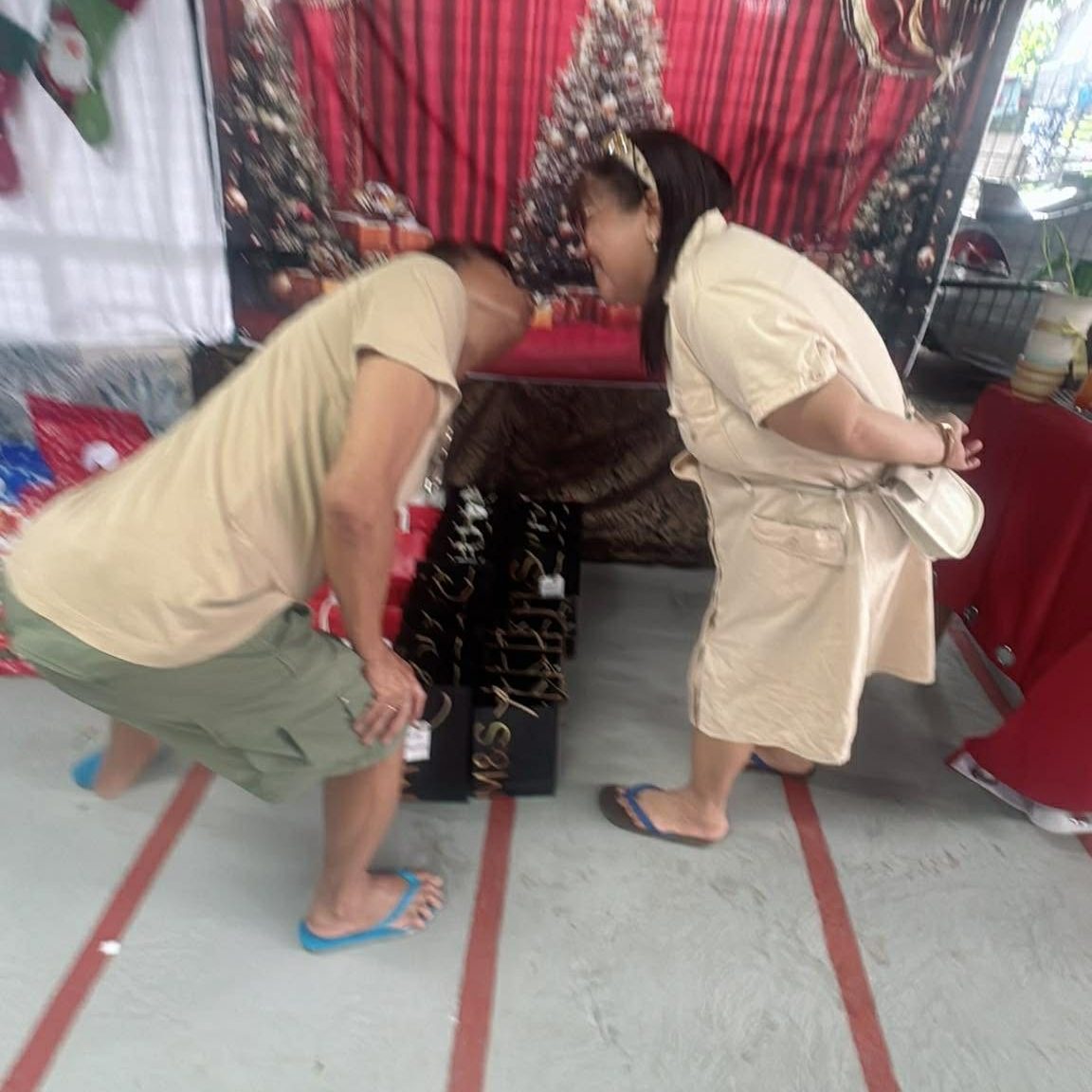
We did our traditional gift giving, everyone gives everyone a gift. As usual, we don’t really care what the actual gifts are. They are often perky, cute, sometimes corny, sometimes weird. But it’s not the price; it’s the thought. That someone thought of you, picked something with you in mind, wrapped it with care, wrote your name on the tag, and handed it over with a smile.

As I shopped, wrapped, and handed my gifts to every member of the family, I was conscious of how much I’ve always prayed for each one by name. Remembering them this Christmas is only a segment of that routine.

Then came the games with my nephew as emcee, now a pro at inventing games that make everyone temporarily lose their dignity. Simple, easy mechanics that everyone ignores anyway. Laughter explodes when someone is eliminated. Raffle prizes, small and actually, what are they? are announced with exaggerated suspense. Someone complains her name was never put in the jar. Losses are disputed loudly. Wins are celebrated like championships.

In this ritual, silence would have felt wrong.
Kids in Their Own Universe

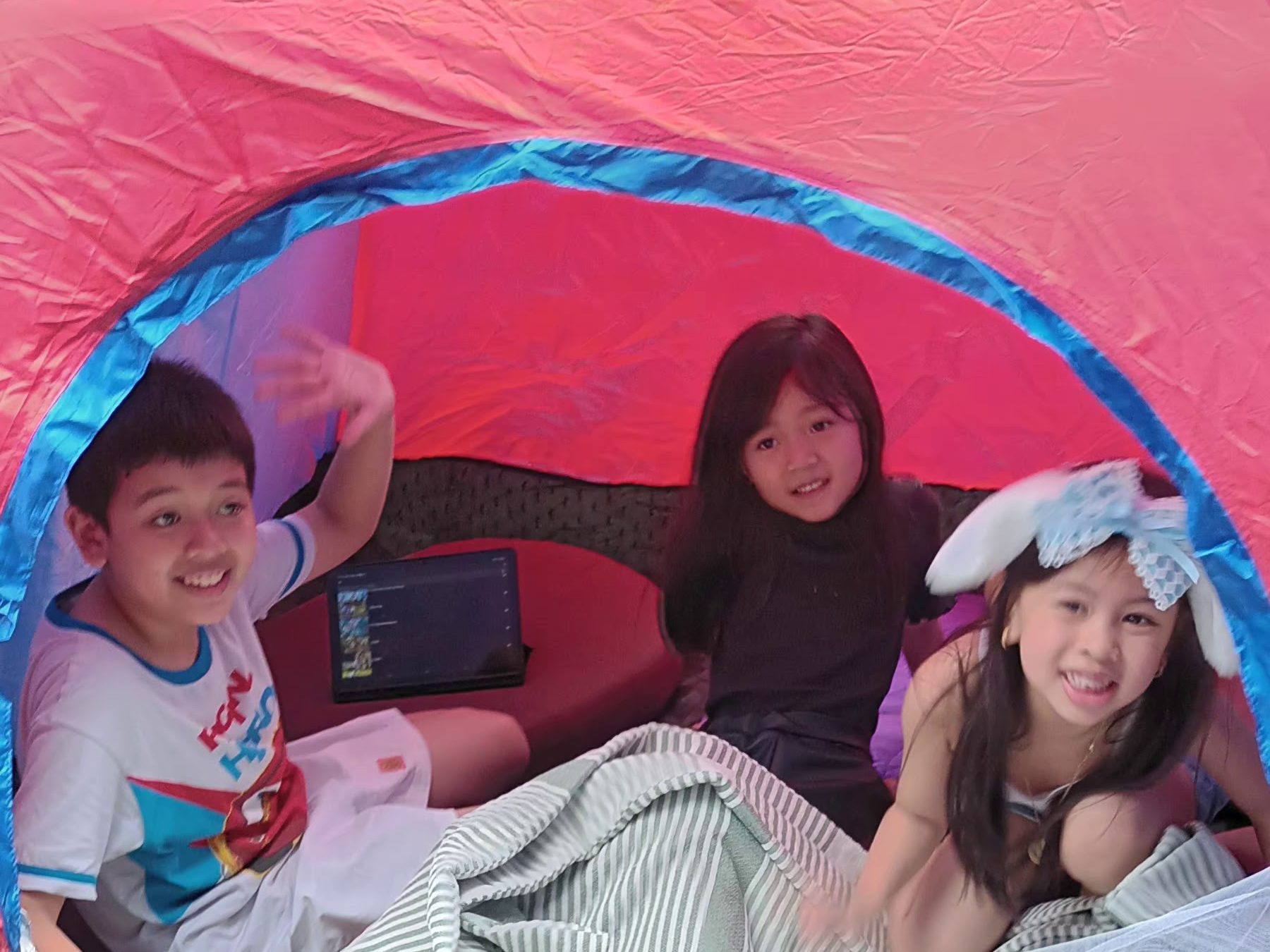
The kids set up camp. My brother placed a tent in one corner of our meeting place, so it became their headquarters. Inside, they secretly ate candies their parents warned them about, opened their tablets, and played Minecraft, zipping the tent closed so no adult could say, “Stop the tablet!”

Their shrieks and laughter sometimes rose above adult chatter. And I’m reminded: reunions are also about letting the children feel what it means to belong to a family. It’s not the rain or the traffic they’ll remember. It’s the tent. The cousins. The feeling of being known.

Updates, Teasing, and Tender Interrogations

Meanwhile, us adults wanted updates. We annoyed the Gen Z nephews and nieces with questions about work, plans, dreams, love lives. We masked our curiosity with tender urging, wanting to know where they stand on the edge of becoming.

One nephew, fresh from a government office where the budget miraculously returned, got roasted for being part of the “suddenly-rich” squad, “financially enabled,” as we teased, while he grinned and pretended not to flex his new status. Meanwhile, our January bride-to-be basked in the spotlight as we cornered her fiancé, dragging him into the games and threatening (with dramatic flair) to boycott the wedding if he dared to sulk or sit out. Everyone else got the mock-warning too: cross our niece and consider yourself “disinvited”, family banter code for we adore her and you better, too.

A full house does something to my spirit. It reminds me I am part of something that did not begin with me and will not end with me.
Showing Up Is Non-Negotiable

This gathering is not merely convenient. It is necessary.

Everything can be postponed, rescheduled, or attended virtually. But a family reunion resists isolation. It insists that showing up matters, that presence is irreplaceable.

Bodies in one space, voices overlapping, shared meals, curious interrogations, these are not optional extras squeezed into a busy life. They are the scaffolding that holds our personal histories together. Before we became busy, accomplished, tired, or carefree, this is where we were: this family. We see one another not as roles, but as people, growing, aging, changing, maturing.

My brother made sure the sound system was loud enough to disturb the barangay. There was dancing, picture-taking, and eating with our hands or disposables, with a trash can just nearby to avoid an eventual mess. Families wore coordinated outfits, that is, one color per unit. My sister-in-law made sure everyone went home with ham and a bag of leftovers.

The Gift of Presence

The family reunion is a gift. It’s something nobody should miss, even just for the assurance of a presence that enlarges the heart and lifts the spirit. When the afternoon was dim enough for everyone to go back to their busy lives, we stretched our goodbyes, returning tables and chairs to their corners. In this Christmas gathering, where everybody made sure they were present, we had some happy rest in our family’s embrace.
My Batangas…

In My Mother’s House, Balinsuso, Barako

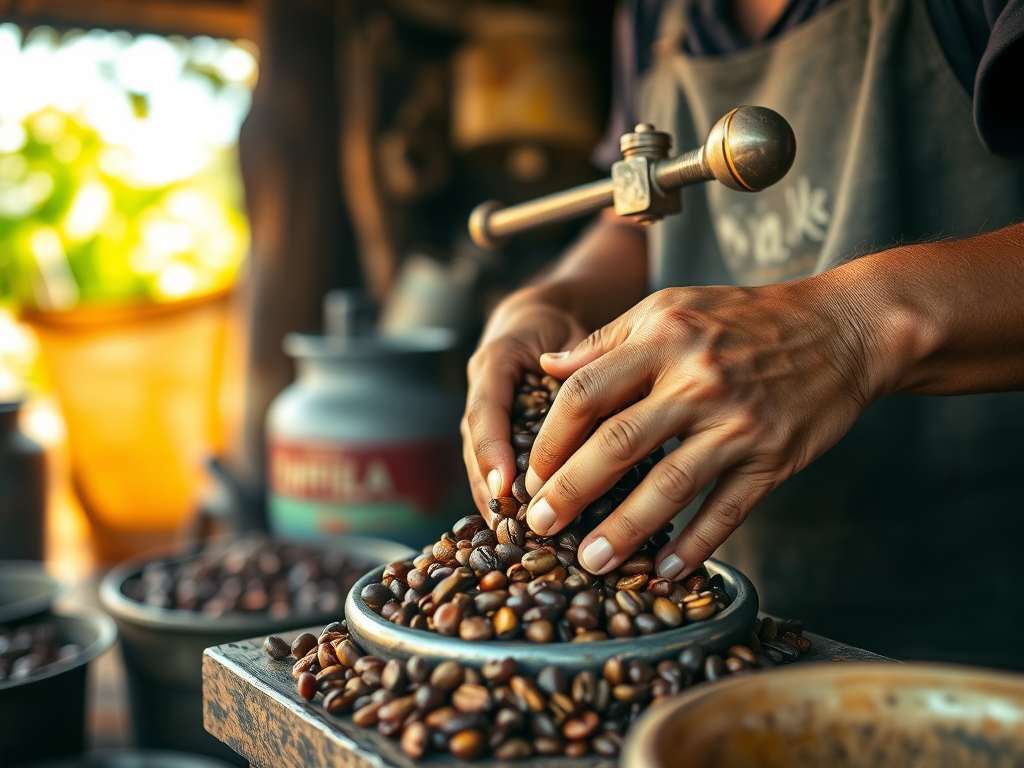
I grew up in Batangas, in three homes. The first one, until I was six, was a rented silong on D. Silang Street. Before sunrise, I would run across the street to Ka Ede’s sari-sari store to buy our coffee. Isang gatang lang po, I’d say, as he ground the beans by hand with a wooden, hand-cranked grinder. He poured them into a balinsuso paper wrap, folded neat like a funnel, which I carried home carefully. Soon after, the kapeng barako would be boiling in the takure, and the house filled with its rich aroma as we got ready for the day.

Breakfast was simple. We dipped pandesal in coffee or poured coffee on rice, depending on what was there. We always had fish, sinaing na tulingan or pritong aligasin. I never thought about whether our meals were balanced or not. Inay always put food on the table, and we were never hungry. Only later, when I was already working in Manila, did I realize that those were difficult years for her.

In Batangas, coffee is simply kape. You ask for it plainly: Pagbili nga po ng kape. Outside the province, though, Barako is what people recognize. It has even become a brand. But barako isn’t always a flattering word. Nabarako means outwitted by someone more cunning. Nakakabarako ka ah is said with offense and a hint of warning. Barakuhin is someone likely to get into fights. A barako can even mean a carabao with horns. Matatapang daw ang Batangueno—mga barako.  

More from WordHouse: A House for Words, Reflection and Memory

Now, onto the paper fold that holds the coffee. The balinsuso is a funnel-shaped fold, completely closed at the bottom. Ka Edes poured the ground coffee into this triangle and locked the top with a crinkle. I carried it home like dirty ice cream. In those days, they didn’t place anything you bought in plastic supot or labo, so I had to be careful on my way, lest I trip and spill the coffee. I’m not sure if there’s any other secure fold that doesn’t require origami skills, but this one is a classic coffee bag.

Nanay’s Two-parts Breakfast

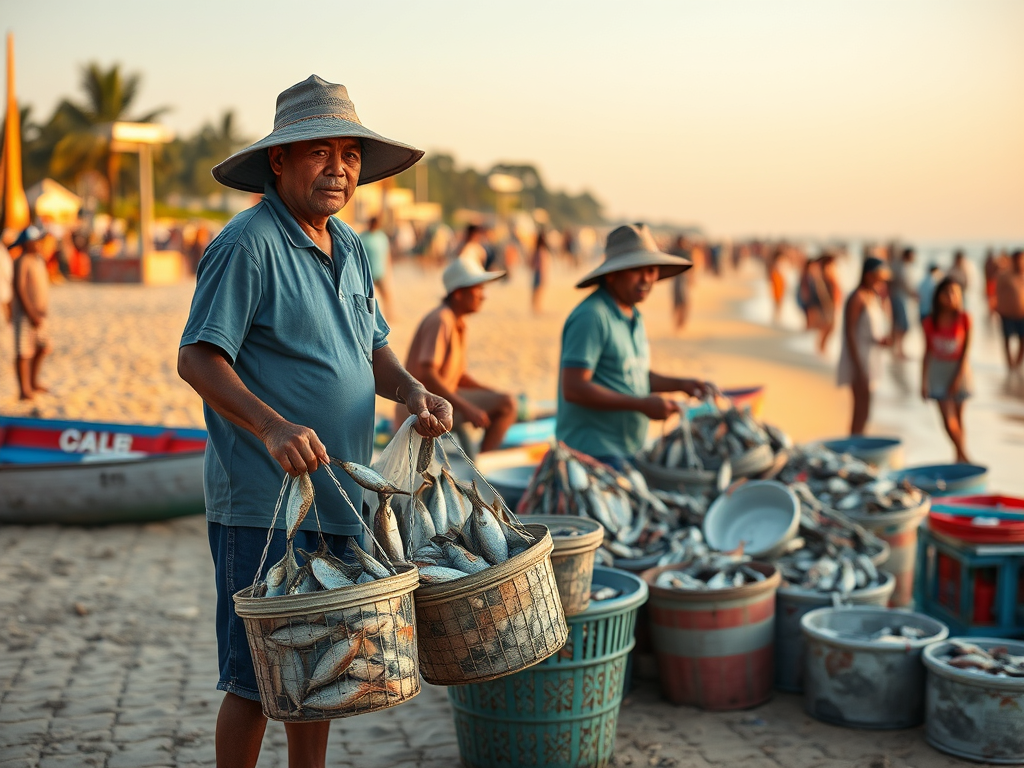
Batangas lies along Batangas Bay and is known for its many beaches. Just off its coast is Isla Verde, where the Verde Island Passage forms a strait that connects the Pacific Ocean and the South China Sea. Naturally, fish abound in the market and most Batanguenos can name them. But even up to my college years, I used aligasin to name almost all the long, slim, red-orange fish I ate. Dalagang bukid was rounder, still orange. Hiwas was flat, like a small pagi or stingray. And what Batangueno doesn’t know Tulingan?

My grandmother, Nanay, as I called her, was a fish vendor. I didn’t see her selling in the market, but whenever we were at her house in the ‘bukid‘ as we referred to it, I sometimes woke early enough to join her at the shore. She chose from banyeras of fresh catch, bargaining with fishermen. Later she would sell the fish at tumpok prices in the market. By the time she returned home, a banyera balanced on her head, it was filled with bread, paborita, suman, melon, grated coconut, pakaskas, rice, bihon, and even bars of Safeguard and Ajax detergent. She still wore her apron, still smelled faintly of the market, and always had her wide smile, her eternally red mouth busy with nganga.

Nanay loved to cook for us when we visited. She always served two breakfasts. The first, at sunrise, was utaw or rice coffee with paborita biscuits crushed into it, something that has remained a family favorite. The second was closer to brunch: fried rice with sinaing na tulingan or pinais, and a real sweetened cup of kapeng barako poured over rice.

Our histories are as islanders

On Our Way to the Bukid

My most textured memories always go back to those times of our visits to my grandparents. I can imagine Inay struggling to haul the four of us, since we first had to take a tricycle from our rented place in Dolor Subdivision (this was where we lived when I was eleven; I was the eldest). Then we would cross a hanging bridge in Wawa, Batangas. We four siblings always scared her as we gleefully walked across the bridge, feigning dizziness and delighting in the swing whenever we ran. Afterward, we’d pass through a forest of palms, our slippers tucked like gloves into our hands, as we walked barefoot, laughing at the occasional shallow sinks in the slimy, dark, watery ground. Once we reached solid sand, we would shout the name of our sundo on the other side of the river. Then Mamay or my uncle would come and fetch us in a rowboat.

I’ve long tried to write a story set in that memory. I realize now that I, too, carry an island narrative. My grandparents’ house is gone, taken by storms, quarrying, and the sea. Yet every time I see barako or sinaing na tulingan sold in sealed containers at malls, I am pulled back to Nanay’s kitchen, to her folded nganga leaves, to the balinsuso-style packets she made.

These fragments may never form a complete story, and maybe they don’t have to. Writing them down keeps the memory alive. And who knows, someone else might find in them a piece of their own story too.

Fragments can grow into stories as we keep them on the page.

Where the Sea Meets the Story: Dreaming Through Writing

I often find myself envisioning my dream home—a quiet retreat perched above the beach, embraced by the soft blue outlines of the mountains that cradle Batangas Bay or Tayabas Bay. These coastal landscapes have long lived in my imagination, reminding me of Malitam, where we once ran barefoot on the sand and gathered seashells beneath the sun.

In this sanctuary of the mind, sliding glass windows welcome the golden light of morning. A small garden rustles in the breeze, and the rhythmic sound of waves fills the air like a lullaby. Though I may never build it with my hands, I continue to dream of living in this space—where peace, creativity, and stillness dwell together.

More than just a dwelling, this imagined home reflects a deeper longing: for space, for quiet, and for the freedom to imagine without limits. At its center lies a cozy library and study. Shelves are filled with books I love and musical scores that stir my soul. A sturdy desk waits quietly for my pen to move across the page. I see myself writing there—fully immersed—turning memory into story. In that quiet, inspiration stirs. Characters awaken. Journeys begin.

Writing and Dreaming Alike

Writing—especially a memoir or a novel with many voices—is, in many ways, like dreaming of a life rooted in peace and belonging. Every word is a step deeper into a space that doesn’t yet exist, but feels vividly real. Each chapter is like entering a new room in the imagination, crafted with intention and care.

Just as I return to the vision of that seaside home again and again, I return to the page. My writing, like my dreaming, is an act of persistence and quiet hope. Sometimes, the vision fades. Sometimes, doubts creep in—will this dream ever take shape? Will the words ever say what I mean? Still, I carry on. Dreaming costs nothing. And writing, too, is a kind of faith—a devotion to meaning, to beauty, to truth told in my own voice.

The Gift of Imagination

There’s something tender and sacred about both writing and imagining a home. They begin as quiet sparks. Dreaming becomes planning. Imagining becomes creating. Hoping becomes persisting.

There are no fixed blueprints—just a trust that something meaningful can emerge. Writing stirs emotion just as a home offers comfort and belonging. And neither journey is measured solely by completion, but by the faith and passion that carry it forward. In both, I am learning that the heart often knows the way long before the feet begin to follow.

A Prayerful Reflection

I pray that one day I may live in that house by the sea—a space where my soul can rest and my creativity can thrive. I ask the Lord to help me overcome doubt and to rest my faith in His higher ways and perfect timing.

When I write, I do so with the belief that my words are a witness to who I am and who I am becoming. And I trust that God is not finished with me yet.

Both writing and dreaming of living in a house by the beach begin in the quiet—on blank pages, in silent prayers, and in the deep spaces of the heart where imagination is free to wander. They are acts of trust. As I continue to write and dream, I do so not alone, but with faith that what I long for—whether it’s the comfort of a seaside home or the unfolding of a meaningful story—will one day become a blessing, not only for me, but for others too.

Living My Extraordinary Life

Now and then, I find myself wandering into the realm of what-ifs. I look back and think about the things I might have missed—those extraordinary milestones people often speak of. Extraordinary in their scale, boldness, impact, or the way they’re remembered.

But when I scan the contours of my own life, nothing leaps out as extraordinary. No major celebration. No daring adventure. No public achievement or sweeping cause. My days have always been—and still are—structured. Predictable. Routine.

And the more I live inside that routine, the more I drift toward wondering what could have been… if.

But then again, I write.

Writing has been the central activity of my life since I graduated from college. It may not be flashy, but it’s a major part of who I am. I didn’t always plan for it to be this way, but through small, gracious opportunities, writing became both discipline and refuge. And yet, if you ask any writer, they’ll tell you: writing rarely feels extraordinary. Not unless you’ve written a bestseller. Or at the very least, been published somewhere beyond your blog or email inbox.

Maybe just being published—especially in this country—counts as extraordinary.

Still, there’s a steadiness in the act itself. A consistency to the way I keep desiring, doing, and persisting to write. That rhythm—that stubborn, almost meditative presence of writing in my life—is the heartbeat of my days. It isn’t glamorous. But it’s where I feel most alive, where understanding flickers into clarity. Writing moments are small, quiet, but weighty. Sometimes, it feels as if I’m helping shift something in the world—even if just a little.

Most days, it means sitting alone for long stretches. First with pen and paper, now with my computer. Often anxious about choices. Making mistakes, realizing them, regretting some, letting others go. This is part of the writing life. And strangely, it’s also what makes it extraordinary: the sheer amount of time spent thinking and reflecting quietly affirms that this life is worth living.

Progress is slow. Publication, even slower

But there’s something deeply fulfilling about thinking hard about a single idea—shaping it, doubting it, challenging it, then moving it forward, even a few lines at a time. Will my work ever make waves? I’ve stopped asking. That question, I’ve come to realize, is beside the point.

There are evenings when I stare at my screen and wonder: is this it? So what if I can write? What do I have to show for it? A folder of half-finished drafts? A blinking cursor? A cluttered desk and a dozen tabs open?

And yet, I keep going.

I don’t have a breakthrough book or an award-worthy story. But I’m starting to believe that this writing routine—the one I’ve practiced quietly for years—might be more extraordinary than I once thought. Not because it’s dramatic. But because it’s real. Because it’s steady. Because it’s full of care.

I used to think extraordinary meant once-in-a-lifetime. Now I think it can mean showing up every day with purpose, even for small, quiet tasks. Even for words that no one may read.

I’m keeping the rhythm.

A blog post. A personal essay. A newsletter draft. None of this is easy. But I like doing it. And maybe that’s what makes it extraordinary. How strange, and lovely, that simply putting words on a page makes me smile.

So I keep showing up. I keep piling pages onto pages of drafts that may never be published. I have poems that might one day find their way into a personal anthology—Volume 2, perhaps.

I’m performing my extraordinary life in circular motion—looping back, writing again, making meaning from the mundane. Extraordinary because it keeps going. Extraordinary because I am enjoying it to the fullest.

WHY I NEVER WORKED AT HOME, EVEN DURING THE PANDEMIC

The Reality of a “Garden View” Condo

My condo felt less like an investment and more like a tight box. Living on the second floor, I was promised a “garden view”—which has turned out to be nothing more than a monotonous wall of generic leaves, offering zero visual interest. Even the brief flashes of the passing MRT, once a reminder of the world beyond, are now blocked by the steel backs of billboards. And night offers no escape. Instead of a sparkling river or bright neon lights, I see the tower’s stark, brightly lit square boxes across the way—a relentless grid of identical windows. This supposed haven of scenic views has become a 24-hour panorama of boxed-in boredom. Inside, the feeling of constriction only intensifies, leaving me constantly longing for wider spaces.

The Co-Working Sanctuary: Productivity and a Glimpse of Green

During the pandemic, a strange calm fell over the city streets. While everyone else stayed cooped up at home, I walked to a co-working space at Julia Vargas Avenue after three long months when the lockdown finally eased up a bit. Instead of feeling trapped in my boxed-in condo, I rented an air-conditioned haven. Walking was a healthy escape, a real wellness boost. My three-block walk took me through the streets of Greenfield, where trees and a variety of shrubs and other greenery thrived. My eyes, starved of anything interesting beyond those generic leaves and billboards, drank in the varied greens I passed along the way.

Their only client, I happily consumed the free coffee and snacks in my rented workspace. I dressed up every morning and proceeded like clockwork to that makeshift ‘office.’ Productivity flowed as soon as I sat at the table provided, and I pounded my computer keys with concentration. My brain embraced the difference. Back in my condo, work blurred into the endless cycle of household chores. Laundry seemed to multiply, I obsessively cleaned the bathroom tiles, and pointlessly re-organized already tidy closets. I even swept out the kitchen cupboards, a futile battle against the persistent cockroaches. But at the workspace, I morphed into the diligent ‘crafter’ of words, achieving most of my writing goals. Instantly, in the workspace, I drew a clear line between this condo tenant battling daily domesticity and this writer perched, metaphorically, on a high tower of thought.

The Return of the Urban Jungle and the Enduring Need for Escape

But as they say, reality bites. That quiet time on the streets is gone. Now, Pioneer, Sheridan, Mayflower, Shaw Boulevard, and San Miguel Avenue roar back to life, choking the air with fumes. Walking those blocks to the co-working space is no longer relaxing, even though the same trees and greenery still line the sidewalks. EDSA, a constant noisy presence nearby, adds to the urban cacophony. The sidewalks are crowded with hurried commuters, the air thick and heavy. Now it’s a battle for a taxi or a squeeze onto a tricycle for what used to be a pleasant trip to the co-work space.

Still, working from my boxed-in condo is out of the question. The visual dead end destroys any chance of concentration, and the brief quiet of lockdown has been shattered by constant drilling, hammering, and shouting – a relentless assault on my senses. My noisy, cramped cage of a condo eschews a full feeling of being at home. My mind drifts to imagined escapes – places with clean, vast air and the soothing sounds of waves or wind through mountain pines.

My online searches are constant, typing ‘seafront,’ ‘beachfront,’ ‘mountain view,’ and ‘seashore.’ I crave the endless blue of the ocean or the silent embrace of the mountains with a visceral intensity. The boundless sea and towering mountains are the antidotes to my urban nightmare. But this constant craving for eternal beach quiet or the silent grandeur of the mountains remains a dream. The immediate reality of my finances slams the door shut on packing a bag and escaping to those longed-for vistas; even a single day of such respite feels like an unattainable luxury.

A profound sadness washes over me, the recognition that countless others share this dilemma – this persistent yearning for escape, perpetually held at bay by the unwavering demands of daily life. It dawns on me that the only tangible path toward finally affording that heaven of fresh air and expansive view is a multiplication of my work efforts. I tried bringing a sliver of solace into my constricted condo, carefully selecting tiny elements of nature – small potted plants to line my desk and shelves – only to watch them futilely wilt under the relentless humidity.

So, I continue working daily in a co-working space, channeling my frustration to a pursuit of more productivity, sidelining my dream of a distant shore or silent mountain peak. With a deep, long sigh, I desperately acknowledge that this ideal, peaceful, cool, and relaxing vacation away from the unyielding urban grind is only possible during deep sleep.