My Batangas…

In My Mother’s House, Balinsuso, Barako

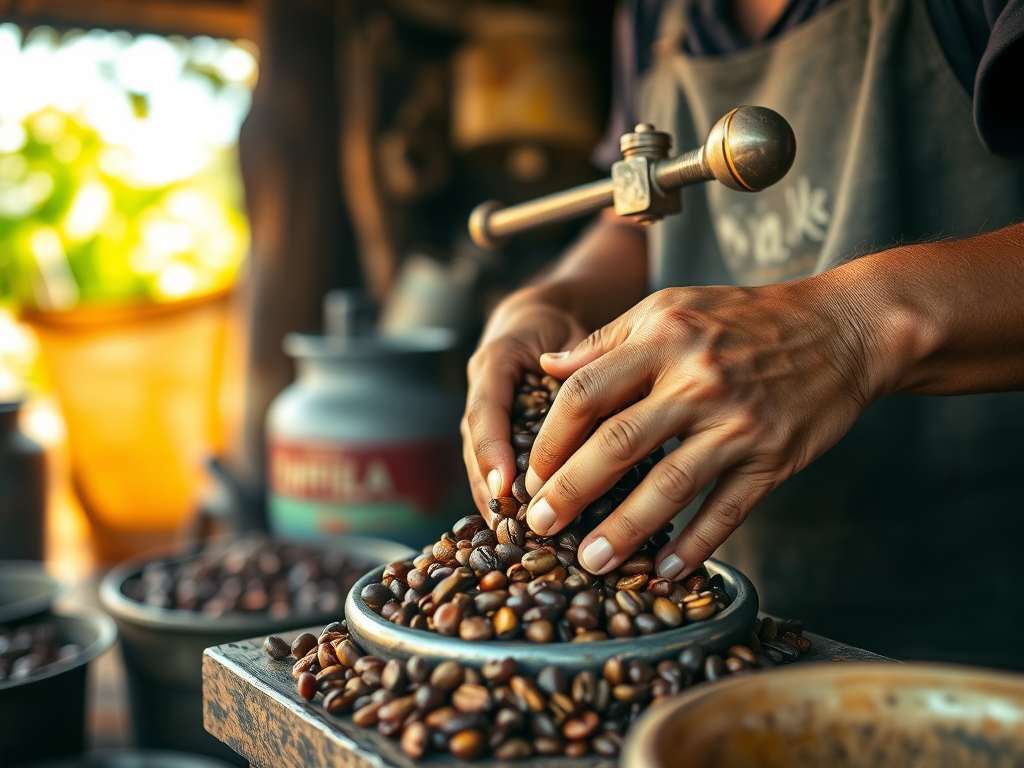
I grew up in Batangas, in three homes. The first one, until I was six, was a rented silong on D. Silang Street. Before sunrise, I would run across the street to Ka Ede’s sari-sari store to buy our coffee. Isang gatang lang po, I’d say, as he ground the beans by hand with a wooden, hand-cranked grinder. He poured them into a balinsuso paper wrap, folded neat like a funnel, which I carried home carefully. Soon after, the kapeng barako would be boiling in the takure, and the house filled with its rich aroma as we got ready for the day.

Breakfast was simple. We dipped pandesal in coffee or poured coffee on rice, depending on what was there. We always had fish, sinaing na tulingan or pritong aligasin. I never thought about whether our meals were balanced or not. Inay always put food on the table, and we were never hungry. Only later, when I was already working in Manila, did I realize that those were difficult years for her.

In Batangas, coffee is simply kape. You ask for it plainly: Pagbili nga po ng kape. Outside the province, though, Barako is what people recognize. It has even become a brand. But barako isn’t always a flattering word. Nabarako means outwitted by someone more cunning. Nakakabarako ka ah is said with offense and a hint of warning. Barakuhin is someone likely to get into fights. A barako can even mean a carabao with horns. Matatapang daw ang Batangueno—mga barako.  

More from WordHouse: A House for Words, Reflection and Memory

Now, onto the paper fold that holds the coffee. The balinsuso is a funnel-shaped fold, completely closed at the bottom. Ka Edes poured the ground coffee into this triangle and locked the top with a crinkle. I carried it home like dirty ice cream. In those days, they didn’t place anything you bought in plastic supot or labo, so I had to be careful on my way, lest I trip and spill the coffee. I’m not sure if there’s any other secure fold that doesn’t require origami skills, but this one is a classic coffee bag.
Nanay’s Two-parts Breakfast

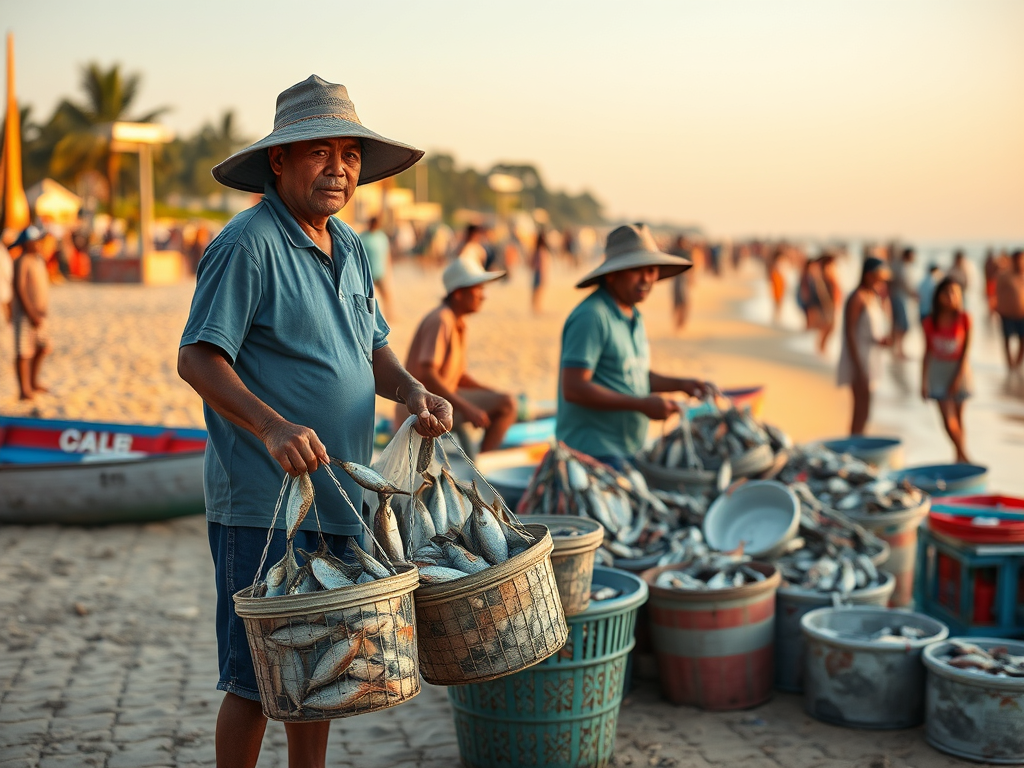
Batangas lies along Batangas Bay and is known for its many beaches. Just off its coast is Isla Verde, where the Verde Island Passage forms a strait that connects the Pacific Ocean and the South China Sea. Naturally, fish abound in the market and most Batanguenos can name them. But even up to my college years, I used aligasin to name almost all the long, slim, red-orange fish I ate. Dalagang bukid was rounder, still orange. Hiwas was flat, like a small pagi or stingray. And what Batangueno doesn’t know Tulingan?

My grandmother, Nanay, as I called her, was a fish vendor. I didn’t see her selling in the market, but whenever we were at her house in the ‘bukid‘ as we referred to it, I sometimes woke early enough to join her at the shore. She chose from banyeras of fresh catch, bargaining with fishermen. Later she would sell the fish at tumpok prices in the market. By the time she returned home, a banyera balanced on her head, it was filled with bread, paborita, suman, melon, grated coconut, pakaskas, rice, bihon, and even bars of Safeguard and Ajax detergent. She still wore her apron, still smelled faintly of the market, and always had her wide smile, her eternally red mouth busy with nganga.

Nanay loved to cook for us when we visited. She always served two breakfasts. The first, at sunrise, was utaw or rice coffee with paborita biscuits crushed into it, something that has remained a family favorite. The second was closer to brunch: fried rice with sinaing na tulingan or pinais, and a real sweetened cup of kapeng barako poured over rice.

Our histories are as islanders

On Our Way to the Bukid

My most textured memories always go back to those times of our visits to my grandparents. I can imagine Inay struggling to haul the four of us, since we first had to take a tricycle from our rented place in Dolor Subdivision (this was where we lived when I was eleven; I was the eldest). Then we would cross a hanging bridge in Wawa, Batangas. We four siblings always scared her as we gleefully walked across the bridge, feigning dizziness and delighting in the swing whenever we ran. Afterward, we’d pass through a forest of palms, our slippers tucked like gloves into our hands, as we walked barefoot, laughing at the occasional shallow sinks in the slimy, dark, watery ground. Once we reached solid sand, we would shout the name of our sundo on the other side of the river. Then Mamay or my uncle would come and fetch us in a rowboat.

I’ve long tried to write a story set in that memory. I realize now that I, too, carry an island narrative. My grandparents’ house is gone, taken by storms, quarrying, and the sea. Yet every time I see barako or sinaing na tulingan sold in sealed containers at malls, I am pulled back to Nanay’s kitchen, to her folded nganga leaves, to the balinsuso-style packets she made.

These fragments may never form a complete story, and maybe they don’t have to. Writing them down keeps the memory alive. And who knows, someone else might find in them a piece of their own story too.

Fragments can grow into stories as we keep them on the page.
As I am Trying Hard to Write, this is My Page Commitment for the Long Haul

To write a memoir, I need to devote myself to return to the page, day after day, until my story is fully told. This memoir is not fueled by a spontaneous burst of inspiration, but will require a sustained page commitment. I have to be consistent, patient, and willing to sit with the material, even when I find myself in a bind for words and expressions. To maintain momentum, my commitment is to sleep early at ten pm, wake up at three at dawn, and write enough words for three hours before the sun rises.

As I set myself ready for the page on a weekend, performing the ritual—writing at dawn until the alarm stops me after three hours, exercising, eating, reading, walking and back to writing again – I ignore the fluctuating creative energy. I sit down, reflect, write, revise, and discover, knowing that if I allow myself to be distracted, I might lose a crucial thread or miss a vital fragment of memory.

Prompting Sustained Writing

As expected, my memories, the ones I can actually recall, are often blurred and hazy. But excavation is non-negotiable. I have to stir the dormant memories, to unearth those deeply entrenched moments from the past.

By way of a prompt, I am returning to my childhood memories: “When I was a child, what did I say I want to be when I grow up?” I have a general wish to capture my feelings about our family’s consecutive renting of living spaces, the idea of placeless-ness that has haunted my days. I have only a fleeting notion of the constant search for a stable neighborhood in those early years. Can a sustained page commitment unveil the emotions characterizing those transient days of my young life?

From here on, I go back to our first rented home, the ‘silong’ of a huge middle-class home, owned by two senior citizens, who had a charming Kasambahay named Basyon.  Flashbacks center around the relationship with this character who helped us in many ways that sustained our almost always threatened stay in that one bed-room apartment.

I will write on about this, until memory takes me to our next home, this time in a subdivision. The issue turns to relationships with other children in the new neighborhood. By this time, I was entering my teens and was finding myself becoming isolated from the ‘kababata’. The idea pivots to my notions of the friendships I missed at this impressionable age. Up to a point, this prompt sustains my commitment to the page.

In writing, I listed other questions which will help me process my memories

  • Write about the eleven year old me, taking care of a one year old sibling while Inay was busy selling beauty products. I met children in the subdivision but I could not play with them at all.
  • Recall a moment around this subdivision, when I felt too scared to walk to school. Where was I? Describe the adjoining pathway from the house to the main street. Why was walking in that eskinita scary?
  • Describe an ordinary walk in detail—the walk to school, and the walk back home from school – this is mainly about the city sidewalks, the busy hardware stores, the bakery, the old market etc. and how they feature in my memory.

Even if at some point I know that I need to somehow slow down, or if I meet a road block, I hope to keep the writing flowing through these prompts.

Emotional Endurance and Page Commitment

What about emotional endurance? My memoir is not going to be simply a collection of highs and lows of curated anecdotes. In exploring my experiences I come face to face with difficult truths that are hurting me again; those narratives are still without closure after decades of forgetting. I sometimes hesitate to go on because the story will have turned more sour, and I tend to not describe too concretely to dodge the impact of its rawness.

Yet part of my page commitment is this sitting with discomfort and writing through resistance. While I acknowledge the difficulty, I cannot abandon the work altogether. So I try to manage the emotional weight of the experiences through a deliberate alternating of the heavy and the light materials. If on this day, my writing delved into grief or loss, tomorrow, I might try to focus on a more mundane process or moment.

I just did something like this today: After yesterday’s heavy revision and editing of a chapter in a Y.A. Novel I am currently writing, I turn back to organizing a chronology of events, listing possible chapters, and letting go of the burden of the previous page for a while. My page commitment is to sustain momentum by keeping my emotions at bay, without letting any lows of the past or present overwhelm me.

But how deeply should I go back? What will be my angle or perspective in retelling such experiences? There is no way to revive a trauma in real time, but I tell myself that recording suffering is not the mere page commitment here, but understanding its essence, how it figured in the weave of my being.

A Page Commitment is to Structure the Narrative

Without direction, the memoir will end up as disjointed fragments. The outline I wrote during the initial brainstorming for this memoir has been changing. As I write, this outline revises itself, proving that I can still be guided by it, even in how I can write beyond it. When mapping out the chapters beforehand, I can only think of major key moments. But as I write, new patterns are emerging, sometimes taking over the key moments I identified.

But just to set myself on the move to meet my page commitment, I still identified milestones to make me think of the memoir not as a massive project but as a series of key moments. I don’t keep a writing log, but I do have a habit checker, where I simply tick whether I’ve done anything at all on the page today. This reinforces my commitment to the page, even one section at a time.  

Eventually, I may or may not incorporate a story fragment in the whole narrative. In going back and forth into written and rewritten sections, perhaps refining the language making sure they cohere, or just staring at a word and checking syntax and diction, I adhere to these parts in my sheer commitment to the page.

Personal Rewards of Commitment

The memoir itself will be my reward, of course. But the process, when I’m able to get down to each and every task I committed myself to write or do, is also satisfying. The slow accumulation of pages eventually thrills me and boosts my confidence. Another reward is a daily discovery of what and what cannot be done, and the skill emerging from the wisdom.

My page commitment is not just about finishing a book; it is about developing my relationship with the page—showing up, writing through uncertainty, and believing that every page, no matter how small, contributes to a larger whole. This is plain and simple discipline toward a more skill full storytelling and deeper self-understanding. Through the memoir process, I am realizing that my story will unfold on its own time, not on my demand.