How My Tagalog Poems Speak with Filipino Women Poets, Faith, and Urban Stories

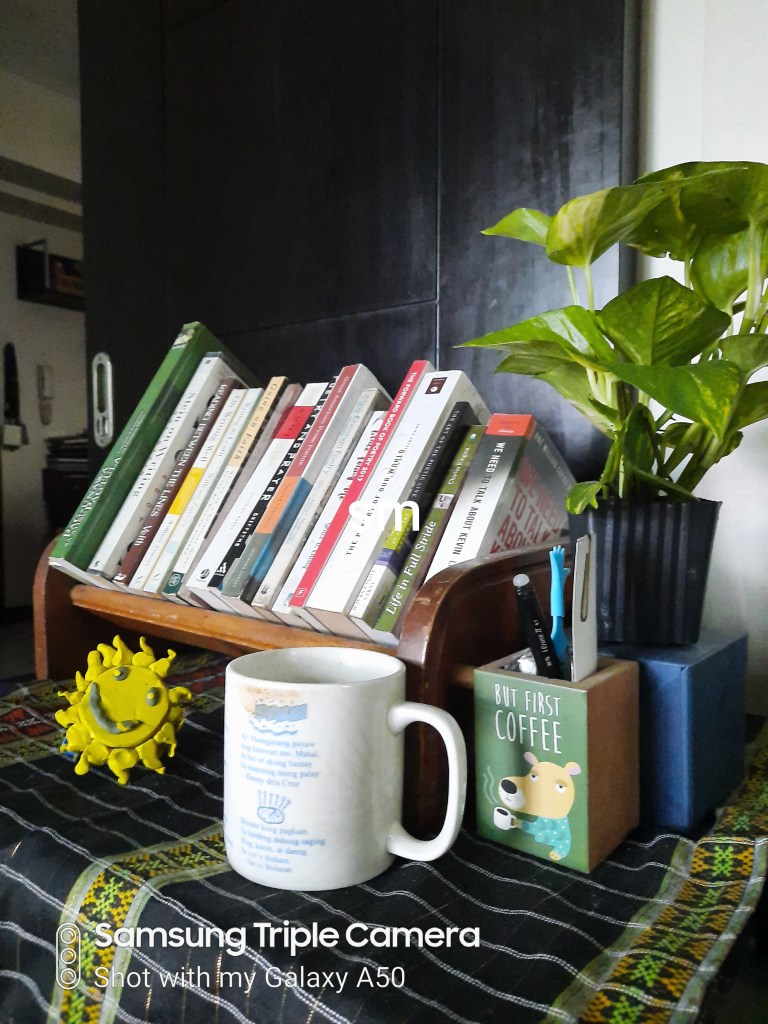
In my journey as a poet, Tagalog has become the language where my deepest thoughts and emotions find a true home. Fearless Filipino women poets like Benilda Santos, Joi Barrios, Luna Sicat, Beverly Siy, and Genevieve Asenjo are my favorite weavers of language into poems of resilience, spirituality, and the weight and beauty of lived experiences.

Tagalog is where my poems find their truest home, shaped by fierce rhythms and sharp insights. These voices inspire me to listen deeply and shape words that capture intimate moments, quiet struggles, and the pulse of everyday stories in the city. I reach for fragments of their strength, faith, and intimate storytelling, hoping that my poetry will carry the same enduring fire.

What Benilda Santos Taught Me About Using Few Words

Some of my poems reach for language as sparingly as possible. I struggle to choose each word carefully, placing it where it can bear its own quiet weight. I learned some of this from the poetry of Benilda Santos. Her Pali-palitong Posporo showed me how deliberate Tagalog can be, how crisp, short words can open up an expanse of meaning. Lingering on her minimalist expression reveals more than what she’s actually written about grief, faith, and womanhood.

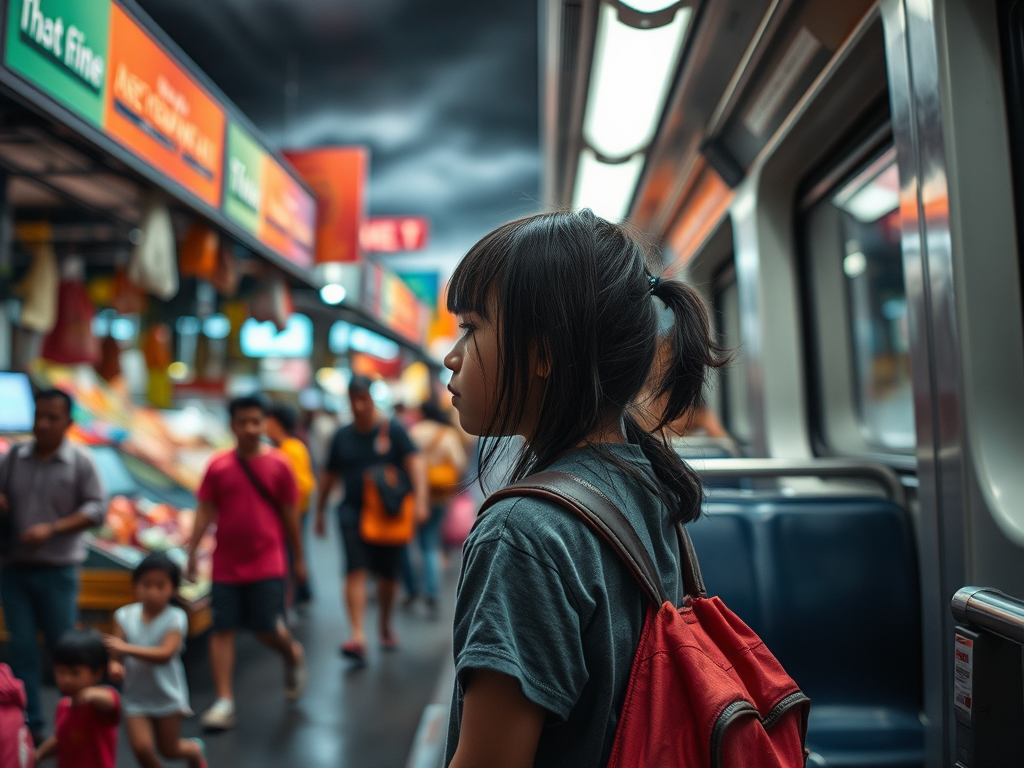
I try to weave in the same way and capture moments by the tones they leave behind. Do I hear the children at the wet market, their quick and thin pleas? The commuters in line, their words swallowed by the brewing storm. Even the mall wanderer’s talk dissolving into the hum in shiny ailes. And that still, silent girl on the LRT to PGH who is burdened with what she could not say.
How Joi Barrios Showed Me Poetry Can Be Both Protest and Lullaby

I’ve never been political. More a coward. Quick to escape rather than confront. But Joi Barrios’s poetry can protest and sing. Resist and still show tenderness. She confronts with melodious verse and deeply felt detail. A woman’s circumstance, often her own, moving through complex political landscapes. I have mimicked this at times. Writing of tired faces on buses and trains. People weighted by the end of the day. Still carrying resilience and hope alongside their sorrow.

When does a poet truly become political? How do poems reveal human rights in the raw edges of everyday life. My subjects are these moments. Commuters braving traffic. Floods. The weight of capitalism on the streets of the Philippines.

Finding Faith and Quiet Questions with Rebecca Añonuevo and Luna Sicat

I have been writing poems about my faith and the doubts that shadow it. In my book, I have gathered these struggles into three threads: pagtataya, how faithful am I? pagkagulantang, how sensitive? pagpasan, how responsible? Rebecca Añonuevo’s poetry, along with her thesis on Gana, charts many poet’s deep and often complicated dialogue with the Divine. My own poems attempt something similar, mapping the restless terrain of my faith in moments of searching, in whispered encounters with God.

Luna Sicat’s poems delve into desire, memory, and history. Her language enacts distance and isolation. In my own work, I try to capture moments like these: a mother leaving her child to work abroad, a daughter caring for an aging parent, a death in the neighborhood that whispers of systemic violence. I watch the quiet faces passing by, their histories folded in silence, their desires hidden in camouflage. Luna’s poems become voices of silent longings, histories murmured between heartbeats, and dreams that remain unspoken.
The Courage to Speak My Truth: Lessons from Beverly Siy and Genevieve Asenjo

Beverly Siy is fearless in speaking her raw, personal truth. Her voice prods one to be brave and speak even when the words are sharp or messy.

I am Batangueña, and sometimes I feel self-conscious about letting my punto slip into my poetry. Batangas Tagalog, as a dialect, can seem inaccessible to some readers, yet I cannot set it aside. It is my language that insists on being spoken.

There is one poet who weaves her native Hiligaynon with Tagalog seamlessly. Genevieve Asenjo writes in three languages and sometimes weaves them all together. This shows me that poems, too, don’t just map a body, but also an archipelago, all the provinces and cities inside me, all the places of home and belonging.
Finding the Beat Between Where I’m From and How I Speak

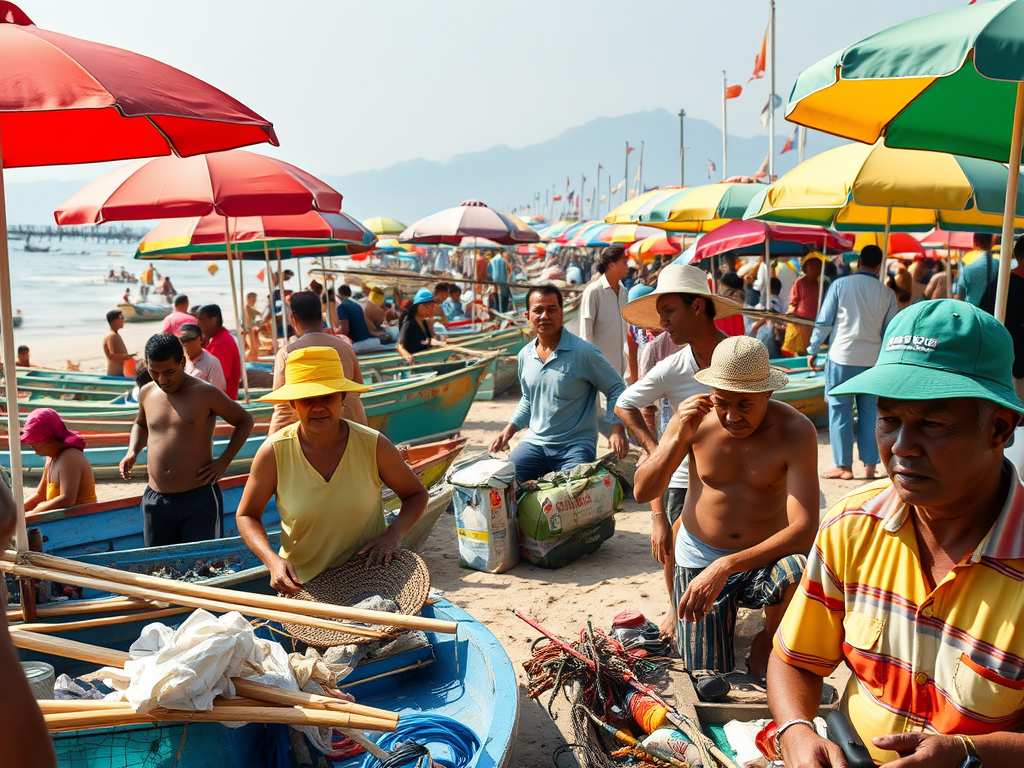
My poems flow in Tagalog, shaped by the stories I hear behind weary faces on buses and trains, in markets and malls, on streets and highways. My essays, however, feel more at home in English. I often struggle to write them in Tagalog, and when I translate for convenience, the result feels like stiff, borrowed clothes. Perhaps it is because of my schooling. In all my education, English essays were graded and assessed, while Tagalog was reserved for spoken stories, warmth, and shared laughter.

My use of Tagalog in poetry comes from a belief in its spirit and depth. Tagalog holds music, rhythm that breathes, and syllables that sway. I court its words to carry both tenderness and bite. English, for me, offers structure and sometimes direct argument. Both languages are mine to use, and I will not compromise context or meaning in either.
Oras ng Tahimik

Habang mag-isa sa sulok na dalanginan

ay nagsusulat ng mga hinaing

panukala panagimpan

Pinakikinggan Niya ang mga salita

Nalalaman ang hinuha paalam

At alam din Niya ang mga pabula ng

dila panayam mga pasinaya

Walang mananatiling lihim

o hiwaga ng isip at pangangatawan

Walang hahayaang maligaw sa

tanong mga pagkagulat

Maraming salamat

Sa pananatili ng liwanag

pag-aagam agam sa dudang paggiliw

pamimintuho ng pag-ibig

Maraming salamat

Sa pag-igpaw ng wika

sa dibdib ng maliw sa walang hanggan

Pahintulot na makapasok

sa sinapupunan ng Iyong Salita.

Quiet Time

Alone in the corner—
praying, writing:
petitions, dreams, visions.

He listens,
each word thick with the scent
of looming goodbyes.

He knows tongues and fables,
curiosities, projections—

no thought or flesh
remains hidden.
Nothing is lost
to doubt or wonder;
he allows no shock
to linger.

Thank You.

That light persists
even in the fog of doubt,
and grace—
ever searching—
still finds love.

Thank You.

Words brim with wisdom,
spilling into eternity—
graceful entries
into the womb
of Your Word.

copyright by ninangjatwordhouse.com 2025

HOW TO FEEL OK ABOUT NOT BEING OK

during senior moments

Photo by Anna Tarazevich on Pexels.com

when I wake up and before I sleep, when the feeling of not being ok is most sharp.

From books to TV dramas, this topic of acknowledging your feeling of not feeling ok is becoming a cliché. The premise for this adage is that most of us are not honest about our feelings. As we move within our professional circles or communities, we tend to camouflage our feelings especially when we are supposed to lead the way, in mentoring persons or groups. Before friends, we tend to pretend in order to blend. We hide our true selves before our loved ones to avoid adding to their burdens. Acknowledging the feeling of not being ok is easier said than done. For if we can’t acknowledge it before others, then we have not acknowledged it at all.

talk to someone

Most TV dramas I’ve watched involve close friendships and buddy relationships. The teleplay will always craft a loyal, unassuming friend who listens and responds compassionately. This buddy and companion always gives their friends priority attention in times of need. It takes a long time to develop this kind of relationship. When a fall out happens, the misunderstanding leads to ghosting or erasure. All light and heavy conversations about anything with friends will cease. Lost is the privilege of talking to someone without fear of judgment. Gone is that lightness of being resulting from sharing. Then it will take a long time to find a new confidante.   

engage in self care

My niece told her mother about her boredom with house chores. She had to give up her work in advertising when she had a miscarriage. After that, even working from home presented too much risk. So she stopped working altogether. Eventually, she got depressed. My sister advised her to go window shopping. When she was a young single mother, she used to take her children to the mall, whenever she felt tired and lonely. Her daughter remembered those times in the mall. In those times of useless malling her Mom fitted shoes and clothes without buying, pleasing herself with a momentary new look now and then. My niece obeyed her mother’s advice and went window shopping. She came back home with an upbeat energy, having momentarily escaped that feeling of not being ok.

meditation in poetry

The poet Christian Wiman wrote, “Poetry arises out of absence, a deep internal sense of wrongness out of a mind that feels itself to be in some way cracked.” My ‘meditation’ happens on paper because writing is therapeutic. Poetry in particular is a way of thinking meditatively. In writing poetry, I pause at every line. I struggle with every word and phrase. The meaning of the poem becomes clear to me only when the poem has finally become a poem. Writing a poem is multiple rewriting of structured notes, similar to the endless revision of our lives as we discover some new ways of being. The very first poem I wrote is entitled

journal entry
©1987

Once I tried to weave a verse

for pages back I weaved

but couldn’t stitch more lines than one

and so I went to sleep

and dreamt of verses that are echoes

of life’s embittered cries

and words escaping from the ghettoes

of unfulfilled desires

verses sounding and resounding

rhythmic flowing replies

to question marks abounding

in sleep their wise disguise.

exercise

How not ok I feel could be expressed through aimless walking. Walking without a destination turns negative energy into exhaustion. This exercise cause my pale skin to turn red. I lose the zombie look and gets a halo.

creative expression

One thing that I had always done, collecting art materials and storing them in my old leather bag. I have always wanted to paint. However, I have not painted at all. Not ok with not having done a sketch of even one decent picture, I do an inventory of my paint colors and brushes now and then, to keep hoping. My last sketch was of my Mother when she was still with me. I can’t find this sketch immediately but its the widget at the bottom of Page a Writer that links to this Y.A. blog.

set small goals

I’ve always gotten ahead of myself, or counted chicks before the eggs have hatched. My mouth outpace my vision and I end up projecting but not delivering. But dreaming is a way of coping. When I am not ok, I review the dreams in my journals, highlighting what has been achieved however teeny-weeny.

keep the space clean

I am not ok with noise and a messy home.  I can feel clutter even if I don’t see it because my house is small. Every bag and basket in my home is for storage of basic and mundane things. When I am not ok, I destress by organizing those ‘bagged’ objects, ensuring that every thing I’m keeping away deserves the space. This relaxes me.

listen to music

I find walking with earphones, and listening to music while doing something else, tedious and stressful. Restaurants play background music too loudly-not at all music to my ears. Neighborhood karaoke singing assaults my ear drums. How do I cope in the midst of noise and mess? I leave that space for one that is quiet and orderly, where music adds to the ambiance. But almost always, this space is expensive.

maintain a routine

There is the routine bad habits and the routine that is productive. Routine bad habits include drinking expensive coffee every morning,  eating halo-halo or puto bumbong for dessert, risking a sugar spike, and binge watching on Netflix until very late in the evening. The routine that is productive involves the exact opposite of those three. But when not ok, meryenda and watching K-drama on Netflix is my default-not- ok normal.

seek professional help

My doctors are the following: An endocrinologist, a cardiologist, an EENT specialist, an ob-gynecologist, a breast cancer surgeon, a throat specialist, and an ophthalmologist. Aware of my mortality, I am ok only as far as ok can get. Indeed, my health card is proof of this.

Leave a comment

NOSTALGIA FOR POETRY

In my late twenties, when my first real office boss was resigning and about to move on to another job, I wrote him a long thank you poem. He found the old poem today while cleaning up, probably inserted in some pages of one of his many diaries. When I saw a photo-reproduction of my mid 90s poem, I am struck by my self-confidence then, how brave I was to send away a mere colleague with a heartfelt poem! The twelve-stanza rhyming quatrains appears quaint and amateurish to me now. I wouldn’t dare show it to any netizen on Facebook. On hindsight, giving him a poem was boasting about my ability to craft melodic lines. Back then, confident about my skill in Balagtasismo, I gave this fan of my amateur poetry at least three more poems.

Today, an acquaintance from Batangas City gifted her husband with a beautiful poem for their 8th anniversary.  The poem in free verse juxtaposes her happiness and fear in loving someone so near, a tribute to their intimate and committed union. Her piercing Tagalog lines is from the voice of someone safely anchored on poetry’s shores. After reading her poetry, I was tempted to upload one poem from my unpublished collection – Hugos. Unfortunately, I lack the courage to exhibit my poems on social media.

The last poems I posted on facebook in 2010 were a series of verses for Inay. As a freelancer managing a website, I occasionally blogged some poems. Since I revised more than I finalized, my poems are never finished. Often when I was done revising, I could hardly recognize the original intention of the poem. I thought that poetry was what I could write best. But I have not published a  poem since my mid thirties.

Hugos is a collection of my more than thirty poems recovered and revised from past crafting. Hopefully, they will be bound, stand with a spine, and become a book.